
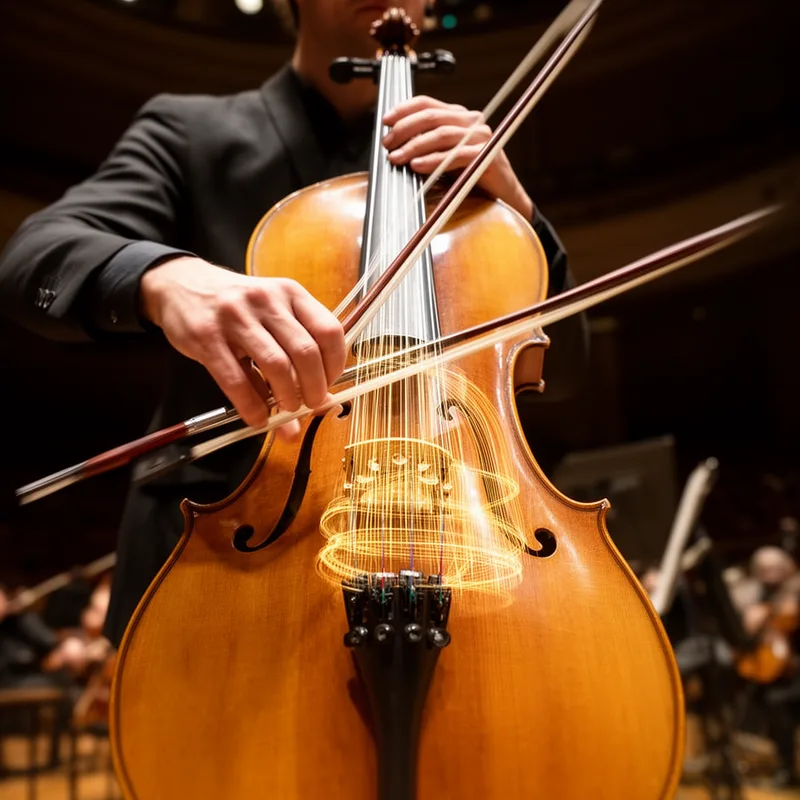
viola d'amore
- noun
- /viˈoʊlə dəˈmɔr/
- Archaic
- She plays the viola d'amore beautifully.
Examples
-
Her collection includes both a baroque violin and a viola d'amore.
-
Many composers wrote chamber works featuring the viola d'amore in the eighteenth century.
-
The musician played a beautiful solo on the viola d'amore during the concert.
-
The viola d'amore has a unique sound.
-
The musician skillfully played her viola d'amore, producing a beautiful, resonant sound that captivated the audience.
-
During the concert, the viola d'amore featured prominently in the ensemble, complementing the harmonies of the other string instruments.
-
Learning to play the viola d'amore requires practice, as it has unique sympathetic strings that add depth to its tone.
How Low

Surface Forms
Morphology
viola + d'amore
The lemma 'viola' clearly signals a string instrument, so a learner who knows that constituent can infer this is a kind/variant of viola. However 'd'amore' is an Italian genitive element unfamiliar to many learners and the instrument's specific properties (sympathetic strings, viol family) are not derivable from the parts, so the overall meaning is only partly predictable.
Etymology
The noun viola d'amore comes from Italian, with viola meaning a string instrument and d'amore meaning 'of love'. One popular story says it was called this because its many strings and soft tone sounded sweet like love songs, so the name helps you remember it is a bowed instrument known for a warm, singing sound.

