

vice versa
 62
4.4
62
4.4

- idiom
- /ˌvaɪs ˈvɜːrsə/
- Is it going from east to west or vice versa?
- rather than vice versa
- policy and vice versa
Loading YouTube…
Watch on YouTubeHe did switch from the King of Clouds to the king of spades or vice versa now.
- He did switch from the King of Clouds to the king of spades or vice versa now.
- Do you feel Russia is acting with China or vice versa on a majority of our headlines?
- Take one from one, move it to two, vice versa.
- You're not going to get ESPN on HGTV or vice versa.
- What is characterized as good is bad and vice versa.
- The hardware determines the software, not vice versa.
- They can make things seem to be what they're not and vice versa.
- That is a Democrats having dinner with Republicans and vice versa.
- This means that C++ code can be used within Carbon and vice versa.
- So liquid methane rivers and liquid ethane lakes and vice versa.
- Maybe what is too much for me is not enough for you, or vice versa.
Examples
-
Individual students move from needing interventions to not needing them and vice versa.
Academic text (2013) -
Penelope likes to be with me late at night, and vice versa.
-
I mean, I got to get along with these people and vice versa, right?
-
Same goes with vice versa and a guy and a girl.
-
Well, vice versa, yes, of course.
-
What you might think is wrong for me, I might think is right, and vice versa.
-
Or vice versa, as the case may be.
-
The Western conviction that state power stems from the people rather than vice versa is an alien idea.
Academic text (1999) -
If we don't do one, we won't address the other and vice versa.
-
She enjoys spending time with her friends, and vice versa.
Synonyms
 102
3.2
102
3.2
In the opposite order, direction, or situation
 42
4.6
42
4.6
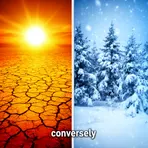
To introduce a statement that shows the opposite of what was just said

In an opposite way so one thing goes up while the other goes down
Surface Forms
Morphology
vice + versa
Vice versa is a lexicalized Latin borrowing whose individual parts are not productive English words with the relevant meanings for most learners; knowing 'vice' and 'versa' separately does not allow a B1 learner to derive 'the other way around'. Its meaning is fixed and conventional rather than compositionally built from transparent English constituents, so it is not predictable without prior exposure.
Etymology
Vice versa comes from Latin words vice ('in place of') and versa ('turned'). This gives a picture of two things swapping places, so it now means 'the reverse is also true'.