
via crucis
- noun
- /ˈviːə ˈkruːsɪs/
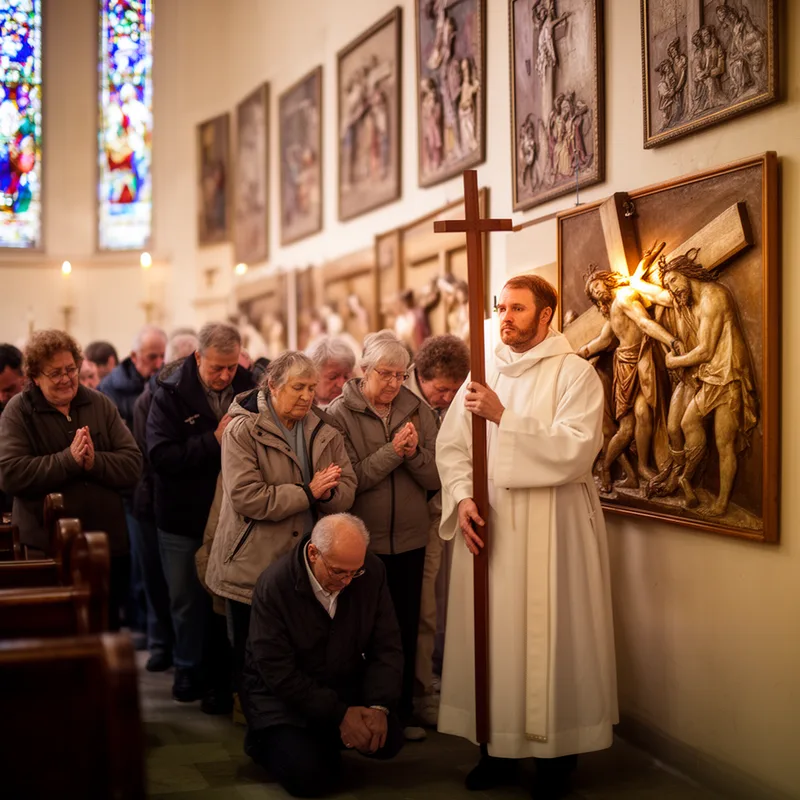
- On Good Friday, the congregation walked the via crucis together in silent prayer.
Examples
-
During Lent, many communities hold a via crucis to commemorate the Passion.
-
The church organized a via crucis for Good Friday.
-
Many churches display artwork to mark each station of the via crucis during Lent.
-
Pilgrims traveled to Jerusalem to experience the original via crucis route.
-
On Good Friday, the congregation participated in the via crucis, reflecting on the Passion of Christ at each station.
-
During Lent, the priest led the community in a solemn via crucis to honor the suffering of Jesus.
-
Many families take part in a via crucis ceremony every year, remembering the trials faced by Christ.
Synonyms

Fourteen images showing Jesus' path to his death on a cross that people pray and think about
Surface Forms
Morphology
via + crucis
This is a Latin loanphrase originally meaning 'way of the cross' and used figuratively to mean an ordeal; 'via' (route) does not by itself convey 'prolonged suffering' and 'crucis' is a Latin form that a B1 learner is unlikely to know or interpret. The expression is culturally and historically specific (religious idiom) and therefore its figurative meaning cannot be reliably derived from the listed constituents, making it opaque to learners.
Etymology
Via crucis comes from the Latin words via meaning 'way' and crucis meaning 'of the cross'. It began as a ceremony where people walk from one station to the next, praying and thinking about Jesus' suffering, so it means a religious walk of remembrance.

