
vetiver


 1
9.1
- noun
- /ˈvɛtɪvər/
- In many perfume recipes, vetiver adds a unique, earthy note that enhances the overall fragrance.
- vetiver grass
Examples
-
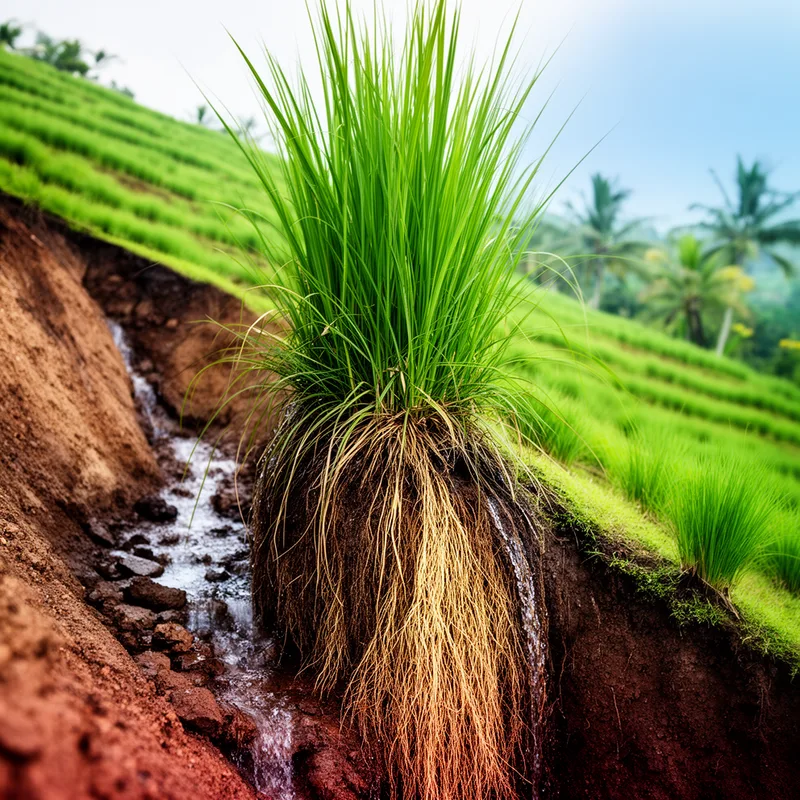
Zobel has also discovered aerenchyma in Vetiver grass, a plant that farmers in India use in grass hedges to collect soil and build terraces similar to those built here with bulldozers.
Academic text (1997) -
These are from vetiver farms, vetiver farms, vetiver farms, vetiver farms green technology solutions.
-
One such compound, nootkatone, is derived from essential oils in vetiver grass.
Academic text (2003) -
For example, vetiver, a fragrant grass used for erosion control, may kill Formosan termites with nootkatone and other substances exuded by the plant's roots.
Academic text (2000) -
The fragrant roots of vetiver are commonly used in perfumes due to their distinctive scent.
-
Farmers often plant vetiver grass along slopes to help prevent soil erosion.
Surface Forms
Etymology
The word vetiver comes from a Tamil name for the plant and came into English through French as vétiver. Because people in India long used its fragrant roots for perfume and to hold the soil, vetiver still refers to the tall, fragrant grass that gives that scent and helps prevent erosion.