
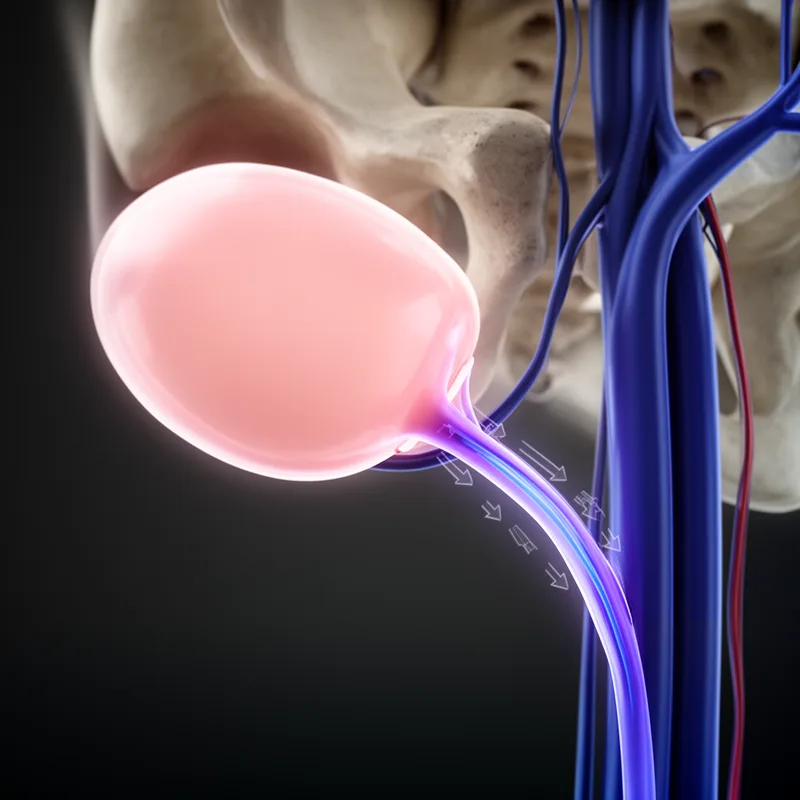
vesical vein
- noun
- /ˈvɛsɪkəl veɪn/
- Specialized
- The vesical vein plays a critical role in draining blood from the bladder.
Examples
-
During the surgery, the doctor carefully ligated the vesical vein to prevent bleeding.
-
The vesical vein carries blood from the bladder.
-
Damage to the vesical vein can lead to complications with urinary function.
-
Surgeons often examine the vesical veins during bladder surgery.
-
During the surgical procedure, the doctor monitored the vesical vein to ensure proper blood flow from the bladder.
-
In cases of bladder surgery, understanding the anatomy of the vesical vein is essential for avoiding complications.
-
The vesical vein assists in draining deoxygenated blood from the bladder back to the bloodstream.
Synonyms

A vein that carries blood from the bladder to other veins in the pelvis
Surface Forms
Morphology
The meaning is directly and transparently derived from 'vesical' (associated with the bladder) combined with 'vein' (a blood vessel), so a learner who knows both constituents can infer it refers to a vein of the bladder. This modifier+noun compound follows standard compositional patterns (common in medical terminology and cross-linguistically), making the sense predictable rather than idiomatic.
Etymology
Vesical vein comes from Latin and English: vesical from the Latin word 'vesica' meaning 'bladder' and vein meaning a blood vessel. So it literally means 'bladder vein', which is why it names a vein that drains blood from the bladder.

