

versicolor


 1
9.6
1
9.6
- noun
- /ˌvɜrsɪˈkʌlər/
- Informal
- In Saint Lucia, the versicolor is revered as the national bird and is protected in a nature reserve.
- versicolor iris
- flag versicolor
- versicolor artemisia
Examples
-
A more common Aspergillus species in wet buildings is A. versicolor, which has been found growing on wallpaper, wooden floors, fiberboard, and other building materials.
Academic text (2003) -
A. versicolor does not produce aflatoxins, but it does produce a less potent toxin, sterigmatocystin, which is an aflatoxin precursor.
Academic text (2003) -
At the post-test, the improvement in diagnostic skills was noticed for diagnoses such as carbuncle, pityriasis versicolor, erythema multiforme, and psoriasis.
Academic text (2007) -
Species used for experimental studies included the spotted salamander, American toad (Bufo americanus), gray treefrog (Hyla versicolor), and wood frog.
Academic text (2009) -
The blue flag iris, scientifically known as Iris versicolor, is commonly found in wetlands across New England.
-
To preserve the versicolor, conservationists have initiated breeding programs to increase its population.
Synonyms

The second word of a scientific name used alone when the genus is clear
Compounds

- Specialized
A climbing woody plant from the southern United States with purple or blue flowers and thick parts that curve back
- Specialized
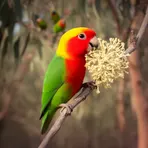
A small parrot from northern Australia with bright red, green and yellow feathers

- Specialized
A common iris with blue-violet flowers that grows in eastern North America
Surface Forms
Etymology
Versicolor as a species name uses the same Latin parts versi- 'changing' and color 'color', and scientists put it in a Latin name to show the plant or animal has many colors. That's why people often call a species just versicolor when they mean the one with many colors.