
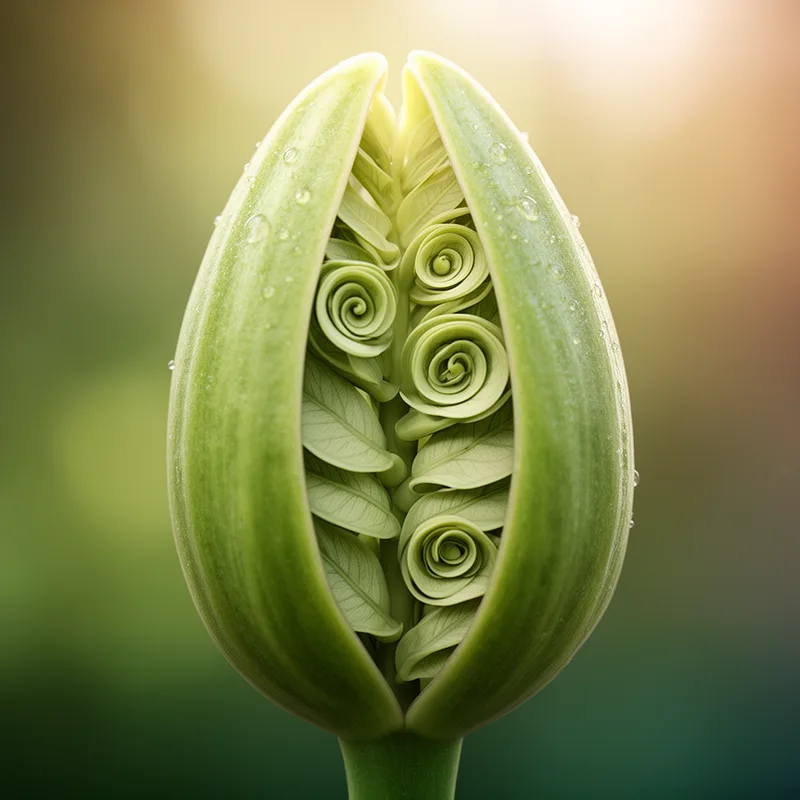
vernation
- noun
- /vɜrˈneɪʃən/
- Specialized
- In most ferns, the vernation is coiled, a feature known as circinate vernation.
Examples
-
The pattern of vernation can help botanists identify different plant species.
-
Studying vernation reveals important insights about how plants adapt to their environments.
-
Look at the vernation!
-
The vernation of the plant is essential for its growth.
-
In most ferns, the vernation is coiled, a feature known as circinate vernation.
-
The pattern of vernation can help botanists identify different plant species.
-
Studying vernation reveals important insights about how plants adapt to their environments.
Surface Forms
Morphology
vernation = vern + ation
The element 'vern' is a non-productive Latin combining form (not a standalone English word) and the technical botanical sense is specialized, so learners cannot reliably derive the meaning from the parts.
Etymology
Vernation comes from the Latin root ver- meaning 'spring', the season when new leaves first appear, and it is the same root you see in vernal. That's why vernation means the way young leaves are folded or arranged inside a bud before it opens.

