
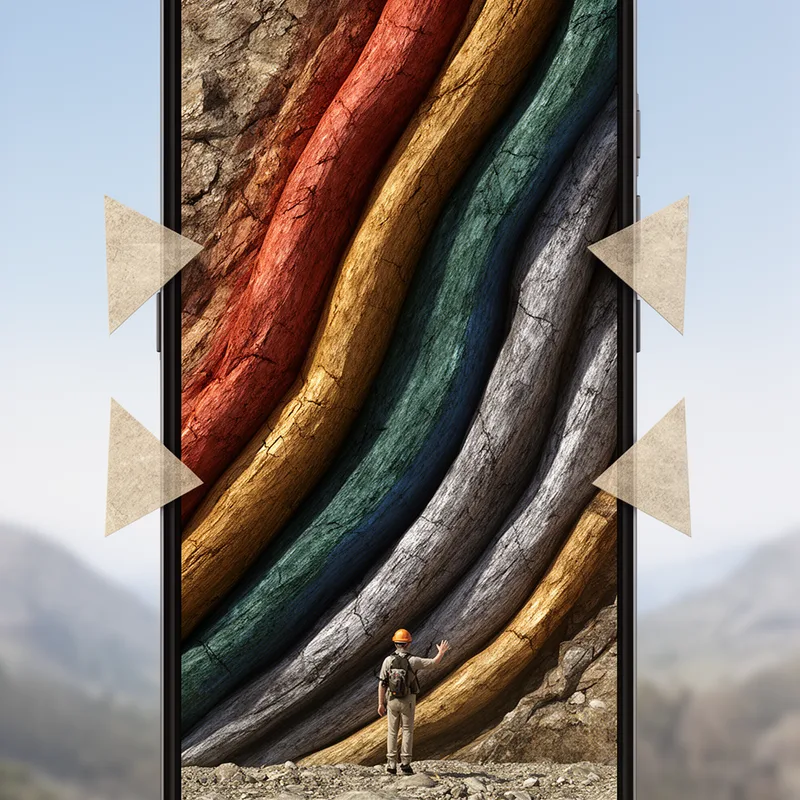
vergence
- noun
- /ˈvɜr.dʒəns/
- Specialized
- Accurate mapping of vergence helps scientists reconstruct the formation of mountain ranges.
Examples
-
The vergence of the rock layers suggested a history of intense geological pressure.
-
The vergence of the rock layers indicates tectonic activity.
-
Geologists measured the vergence of the folds to determine the direction of tectonic movement.
-
Geologists study the vergences of various geological formations.
-
The team's research focused on identifying the vergence of the geological layers to better understand the area's seismic history.
-
Geologists studied the vergence of the rock formations to determine the direction of tectonic movements.
-
In their report, they highlighted the vergence of the structural folds, indicating significant deformation over time.
Surface Forms
Morphology
Etymology
Vergence comes from the Latin vergere, which means 'to turn' or 'to tilt'. Geologists use vergence to describe which way rock layers have turned, so the word tells the direction of movement in the rocks.

