
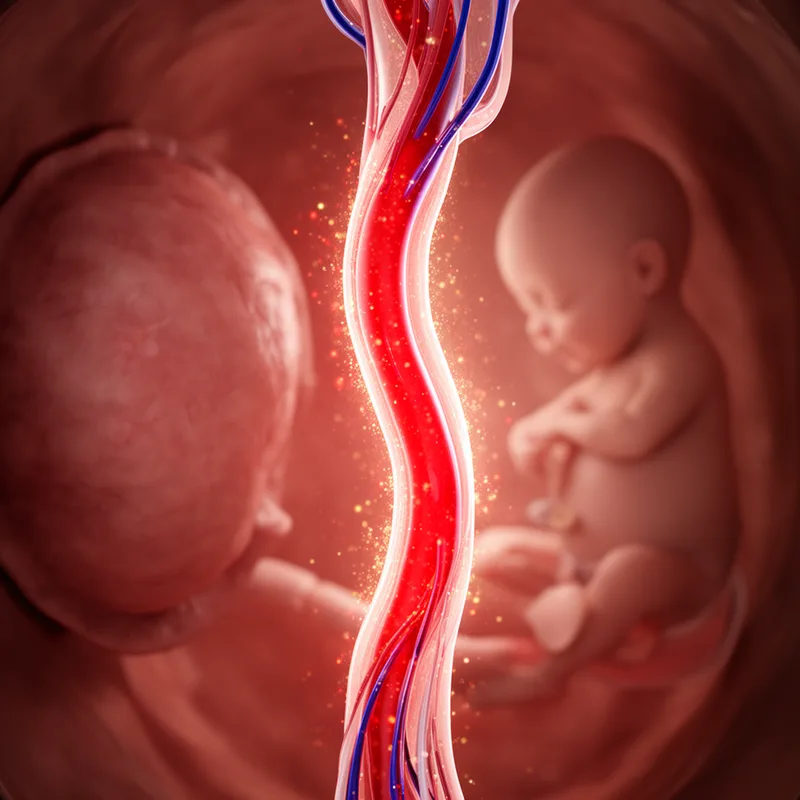
vena umbilicalis
- noun
- /ˈviːnə ʌmˌbɪlɪˈkeɪlɪs/
- Specialized
- The vena umbilicalis is essential for transporting oxygenated blood to the developing fetus.
Examples
-
Doctors examine the vena umbilicalis during prenatal ultrasounds for any abnormalities.
-
The vena umbilicalis closes soon after the baby is born, leaving a remnant in the liver.
-
The vena umbilicalis is essential for fetal development.
-
During pregnancy, the vena umbilicalis carries oxygenated blood.
-
During pregnancy, the vena umbilicalis carries oxygenated, nutrient-rich blood from the placenta to the fetus.
-
Doctors monitor the vena umbilicalis for any issues that may affect the health of the fetus.
-
An ultrasound can reveal problems with the vena umbilicalis, which is crucial for fetal development.
Synonyms

A vein that carries blood with oxygen and food from the placenta to the unborn baby
Surface Forms
Morphology
vena + umbilicalis
This is a Latin/medical compound combining 'vena' (vein) with 'umbilicalis' (umbilical, relating to the umbilicus or umbilical cord). The referent 'the vein of the umbilical cord that carries blood' is directly and predictably derived from those constituents (and has clear cognates in many languages), so a learner who knows the parts can infer the meaning.
Etymology
Vena umbilicalis comes from old Latin words: vena means 'vein' and umbilicalis means 'of the belly button', so you can picture a vein running in the umbilical cord to the baby. That's why the name refers to the vein that carries oxygen and nutrients from the placenta to the unborn baby.

