
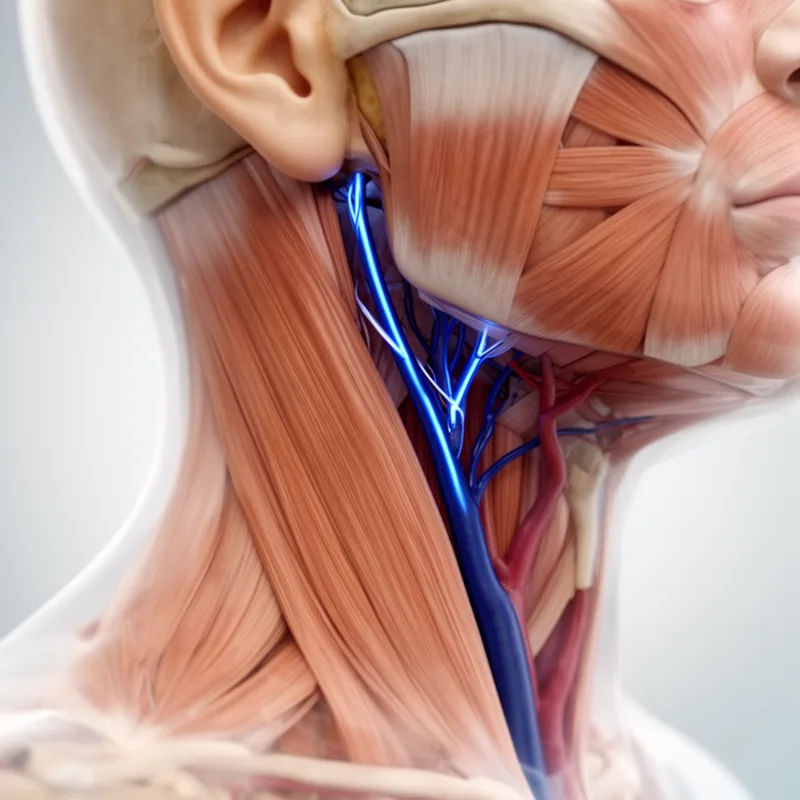
vena sternocleidomastoidea
- noun
- /ˈviːnə ˌstɜrnəˌklaɪdəˈmæsˌtɔɪdɪə/
- Specialized
- The vena sternocleidomastoidea empties into the internal jugular vein, contributing to venous drainage of the neck.
Examples
-
In some individuals, the vena sternocleidomastoidea is more prominent and easily observed during neck surgery.
-
Damage to the vena sternocleidomastoidea can lead to excessive bleeding during procedures involving the sternocleidomastoid muscle.
-
The vena sternocleidomastoidea is crucial for draining blood.
-
During surgery, the vena sternocleidomastoidea was carefully examined.
-
Damage to the vena sternocleidomastoidea can lead to excessive bleeding during procedures involving the sternocleidomastoid muscle.
-
In some individuals, the vena sternocleidomastoidea is more prominent and easily observed during neck surgery.
-
The vena sternocleidomastoidea empties into the internal jugular vein, contributing to venous drainage of the neck.
Synonyms

A vein that carries blood from the sternocleidomastoid neck muscle into the internal jugular vein
How Big


Surface Forms
Morphology
vena + sternocleidomastoidea
The structure is compositional: 'vena' means vein and the second element names the sternocleidomastoid muscle, so the overall meaning (the vein draining that muscle) is directly derivable from the constituents. However, the second constituent is a specialized Latin anatomical form unfamiliar to B1 learners, so although morphologically transparent it is unlikely to be known without technical/medical knowledge.
Etymology
Vena sternocleidomastoidea is a Latin name that describes a 'vein' beside the sternocleidomastoid muscle. The parts are simple: vena means 'vein', sterno 'breastbone', cleido 'collarbone', and mastoidea 'mastoid' the bone behind the ear, so the name points to the vein that takes blood away from that muscle into the large vein in the neck.