
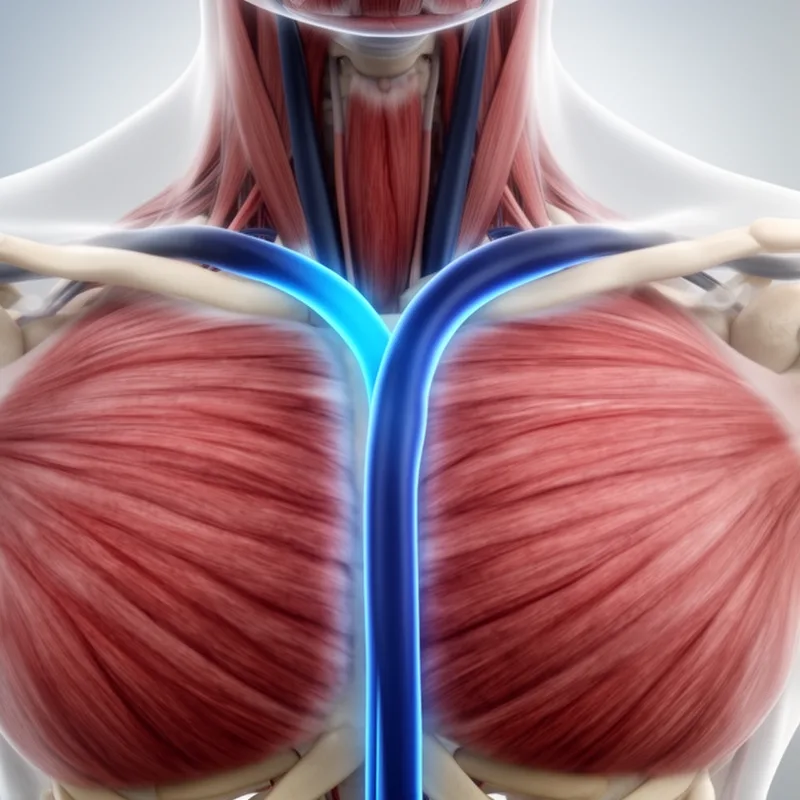
vena pectoralis
- noun
- /ˈviːnə pɛkˈtɔːrəlɪs/
- Specialized
- The surgeon identified the vena pectoralis during the chest procedure to avoid accidental injury.
Examples
-
Knowledge of the vena pectoralis is essential for performing safe pectoral muscle biopsies.
-
Damage to the vena pectoralis can lead to significant bleeding in surgeries involving the upper chest.
-
The vena pectoralis plays a crucial role in blood circulation.
-
Many athletes have well-developed vena pectorales due to their training.
-
During the anatomy class, we studied the vena pectoralis and its role in draining blood from the chest muscles.
-
The vena pectoralis is often examined in patients with upper chest injuries to assess circulatory issues.
-
In his medical research, the doctor focused on the vena pectoralis and its connection to the subclavian vein.
Synonyms
A small tube that carries blood from chest muscles to a larger vein near the collarbone
Surface Forms
Morphology
The term is fully compositional: 'vena' denotes a vein and 'pectoralis' refers to the pectoral (chest) muscles, so the sense 'vein draining the pectoral muscles' is directly derivable from the parts. Although it is technical Latin anatomical terminology, the constituent meanings map transparently and this naming pattern is common across languages, making it understandable to learners who know the components.
Etymology
Vena pectoralis comes from Latin. The word vena means 'vein' and pectoralis comes from 'pectus', meaning 'chest' or 'chest muscle'. So the name literally says 'vein of the chest', which is why it describes the veins that drain blood from the pectoral muscles.

