
vena comitans
- noun
- /ˈviːnə kəˈmɪtənz/
- Specialized
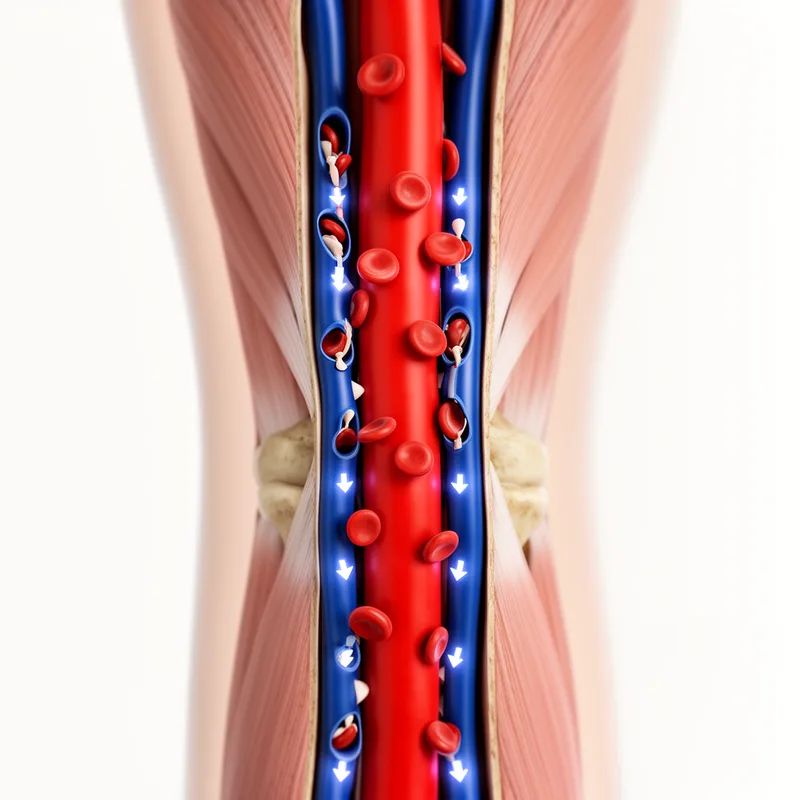
- A typical example of a vena comitans is found in the forearm, where two veins accompany the radial artery.
Examples
-
The surgeon carefully identified the vena comitans that ran alongside the artery during the operation.
-
Damage to a vena comitans may disrupt normal venous return in the associated limb.
-
The vena comitans runs parallel to the artery.
-
During surgery, the vena comitans was carefully examined.
-
In the human leg, the vena comitans travels alongside the femoral artery, ensuring efficient blood return.
-
The vena comitans can be observed in many parts of the body, including the arms and legs.
-
During anatomical studies, students learn how the vena comitans assists the arteries by accompanying them closely.
Synonyms

A vein that runs next to an artery and uses its pulses to help return blood to the heart
Surface Forms
Morphology
vena + comitans
This is a Latin anatomical term: while 'vena' corresponds to English 'vein', 'comitans' is not an English word and is not found in the learner's dictionary, so a B1 learner who merely 'knows the constituents' would not reliably infer 'accompanying' or the anatomical sense. The label is also highly technical and Latinized rather than a transparent English composition, making its meaning unpredictable without prior exposure or specialist knowledge.
Etymology
Vena comitans comes from Latin words vena meaning 'vein' and comitans meaning 'companion'. The phrase paints a simple picture of a vein walking right beside an artery so the artery's pulse helps push blood along, which is why it means a vein that runs alongside an artery.

