
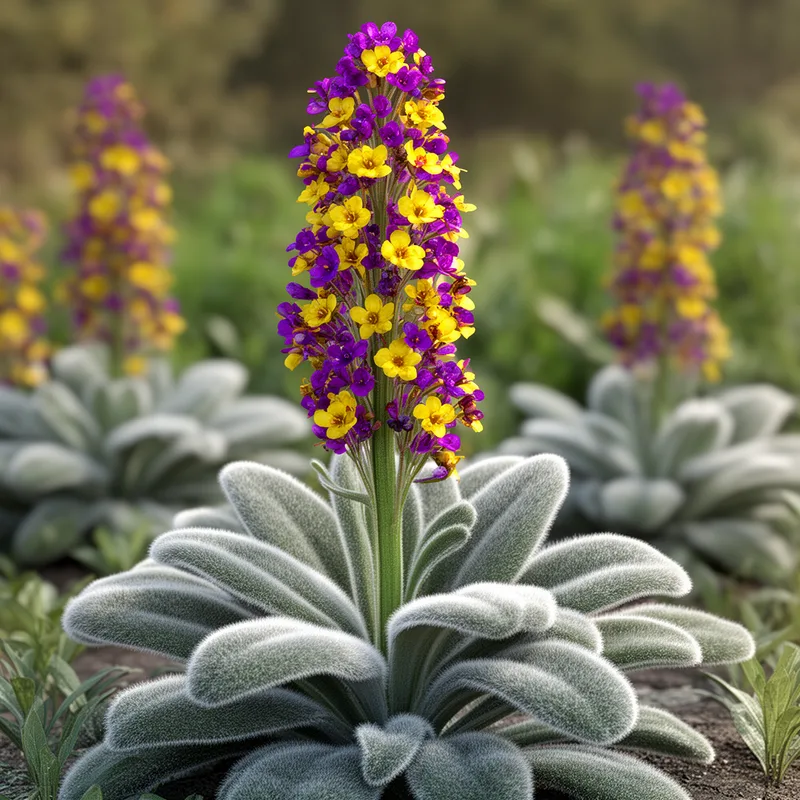
velvet plant
- noun
- /ˈvɛlvɪt plænt/
- Specialized
- The velvet plant is often grown in gardens for its striking flower spikes and soft leaves.
Examples
-
We saw a field full of blooming velvet plants during our hike.
-
In late spring, the velvet plant reveals clusters of yellow flowers that attract bees.
-
Many herbalists use parts of the velvet plant in traditional remedies.
-
The velvet plant thrives in sunny gardens.
-
Many velvet plants bloom in the spring.
-
The velvet plant is admired for its large, woolly leaves and beautiful flower spikes.
-
Gardeners often praise the velvet plant for its ease of care and striking appearance.
Synonyms


 1
9.9
1
9.9
A group of rough plants with woolly leaves and tall flower spikes often called mulleins
 1
9.9
1
9.9
A tall plant with soft, woolly leaves and spikes of yellow flowers

A plant with large soft woolly leaves and tall spikes of yellow flowers
Surface Forms
Morphology
This is a straightforward adjective + noun composition: knowing 'velvet' (soft, smooth) and 'plant' (a living green organism) lets a learner infer a plant with velvety texture or appearance. The composition follows a common and cross-linguistic pattern (ADJ + NOUN), so the meaning is directly derivable for a B1 learner who knows both words.
Etymology
Velvet plant got its name from its large, woolly leaves that feel like velvet. That's why the name links velvet ('soft and furry') to this plant.