

vegetative


 1
7.5
1
7.5
- adjective
- /ˈvɛdʒɪˌteɪtɪv/
- Specialized
- Although both species are perennial, C. demersum seldom produces seeds and disperses largely by vegetative propagules (Les 1991).
- vegetative reproduction
- vegetative propagation
- sexual and vegetative reproduction
Examples
-
Asexual reproduction includes both seed production without fertilization (agamospermy) and vegetative reproduction.
Academic text (1996) -
Farmers often prefer vegetative propagation because it allows for quicker crop production.
-
Sexual reproduction in other species is displaced by vegetative reproduction.
Academic text (1996) -
Aquatic plants employ many types of vegetative structures for reproduction.
Academic text (1996) -
The relative ease of vegetative propagation and the remarkable growth rates should make the planting commercially viable.
Academic text (1991) -
Nevertheless, the principal means of population increase for all three growth forms is by vegetative reproduction (Spencer and Bowes 1993).
Academic text (1996) -
Once established, seagrass meadows are able to expand through vegetative clonal growth by rhizome extension.
Academic text (2012) -
Many plants can reproduce through vegetative means, such as using runners or tubers.
-
During the vegetative stage, plants focus on growing leaves and roots rather than flowers.
Synonyms
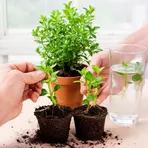
Reproducing without sex, for example when plants grow from cuttings
Compounds

- Specialized
A cell in a plant or animal body that does not make sex cells and helps growth
Surface Forms
Morphology
vegetative = vegetate (semi-transparent) = veget + ative
While '-ative' indicates relating to, the specific meaning of asexual reproduction is specialized.
Etymology
Vegetative in reproduction comes from the root of vegetation and vegetable meaning 'to grow', and it refers to plants making new plants from parts of the parent rather than from seeds. So vegetative reproduction means growing new plants by cuttings, runners, or other plant parts.