

vegetable silk
- noun
- /ˈvɛdʒtəbl sɪlk/
- Pillows filled with vegetable silk are light and comfortable.
Examples
-
The insulation material was made from vegetable silk harvested in Southeast Asia.
-
Because vegetable silk is naturally buoyant, it was once used in life jackets.
-
I bought some vegetable silk for my new pillow.
-
The vegetable silks are perfect for insulation.
-
Pillows filled with vegetable silk provide excellent softness and support.
-
The eco-friendly vegetable silk is an ideal choice for stuffing cushions.
-
After researching natural materials, I decided to use vegetable silk for my new pillow project.
Synonyms
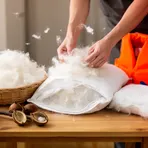
A soft, light fiber from the kapok tree that people use to fill pillows and keep things warm

A light soft natural fiber from seed pods used to fill pillows and mattresses
How Soft


Surface Forms
Morphology
vegetable + silk
The phrase is directly compositional: 'vegetable' signals plant-derived and 'silk' signals a soft, silky fiber, so the compound denotes a plant-based silk-like fiber (e.g., kapok). This follows common English noun-noun compounding patterns and would be understandable to a B1 learner who knows both constituents.
Etymology
Vegetable silk comes from the soft, shiny fibers inside the seed pods of a tree called kapok; they look like animal silk but come from a vegetable, that is, a plant. Because these fibers are light and warm, people used them to fill pillows and life jackets, so vegetable silk now means 'a soft, silky plant fiber used for stuffing pillows and insulation'.