
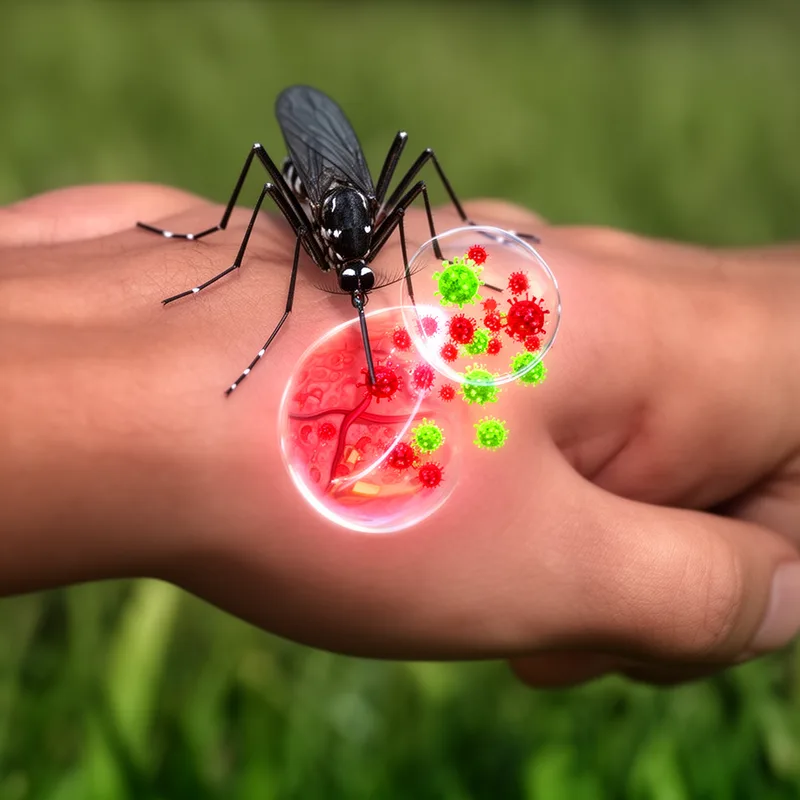
vector-borne transmission
- noun
- Specialized
- Malaria is often spread through vector-borne transmission, particularly by mosquitoes in tropical regions.
Examples
-
The increase in vector-borne transmission of Lyme disease is linked to climate change affecting tick populations.
-
Understanding vector-borne transmission is crucial for controlling diseases like dengue and Zika.
-
If zoonotic, transmission of SBV could have occurred through vector-borne transmission during the period of high vector density in summer and fall 2011.
Academic text (2012)
Surface Forms
Morphology
vector-borne + transmission
The meaning is directly compositional: 'vector-borne' = carried by a vector (borne = carried) and 'transmission' = passing of an infection, so the full sense 'transmission carried by a vector such as a mosquito' is derivable from the parts. This modifier+noun pattern is common and has close equivalents in many languages, making it predictable for learners who know the constituent words.
Etymology
Vector-borne transmission shows a simple picture: a small animal called a vector, like a mosquito or tick, actually 'carries' the germ so it is borne to a person when the animal bites. That's why the term means 'the spread of a disease to people through animals like mosquitoes'.

