
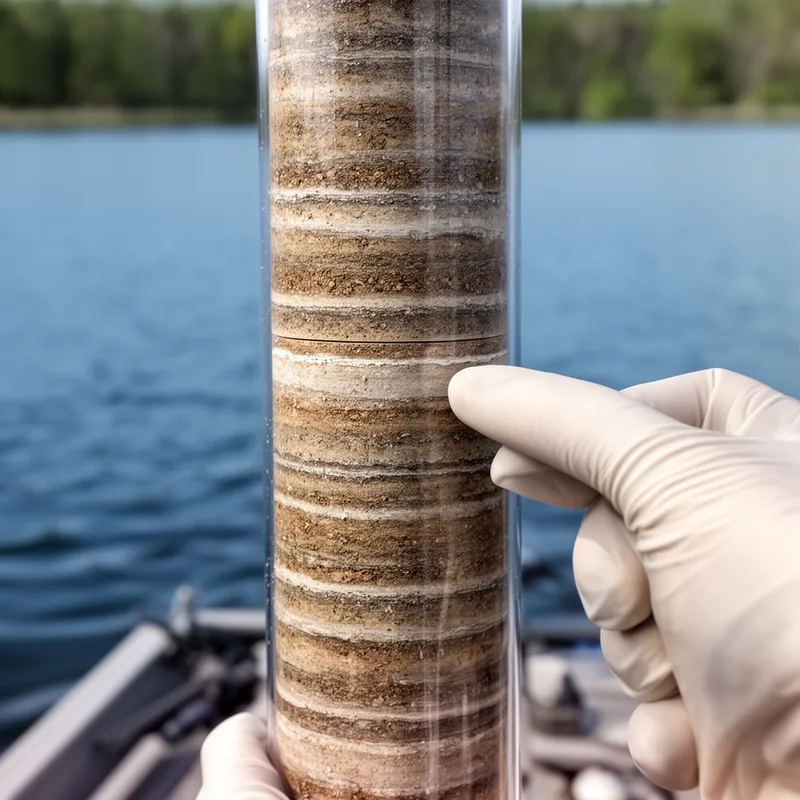
varve


 1
9.9
1
9.9
A thin layer of mud or sediment laid down in one year in a lake
- noun
- /ˈvɑːrv/
- Specialized
 :
varva
:
varva
- For example, there is a lake in Japan (I would need to Google "varve shales in Japan" to name it now), but the summer detritus is algal bloom, which only occurs at a known temperature.
Examples
-
By analyzing the varves in the sediment, researchers can reconstruct historical climate patterns.
-
The lake's varves contain valuable information about the environmental conditions of each year.
-
Scientists study ancient varves to understand the climate changes that occurred thousands of years ago.
How Thick

Surface Forms
Etymology
Varve comes from the Swedish word varv, which means 'layer' or 'turn' and was used by a Swedish geologist for one yearly band of lake mud. So a varve is like a tree ring: one year of the lake's history you can count.