

variolar
- adjective
- /ˌvɛrɪˈɔlər/
- Specialized
- He examined variolar scars on the patient's face to confirm a past infection.
Examples
-
Historians studied the variolar lesions preserved in early illustrations of the disease.
-
The variolar outbreak devastated whole communities in the eighteenth century.
-
The variolar virus caused widespread illness in the past.
-
In the 18th century, variolar outbreaks were common.
-
The doctor explained the variolar symptoms to patients who had never encountered smallpox.
-
Researchers discovered variolar antigens in the remains of historical smallpox victims.
-
During the vaccination campaign, variolar cases were closely monitored by health officials.
Synonyms

Relating to smallpox, such as its rash or scars

Related to or showing signs of smallpox
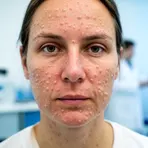
Skin that has small round scars from smallpox
Surface Forms
Morphology
Etymology
Variolar comes from the Latin variola, a word for 'smallpox', and from varius meaning 'spotted' or 'varied', so you can picture the many spots that smallpox makes. The same root is in everyday words like varied and variety, so variolar simply means 'relating to smallpox'.

