

variable-pitch propeller
- noun
- Specialized
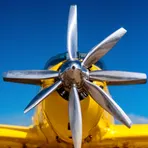
- Many modern aircraft rely on a variable-pitch propeller to optimize their performance in changing flying conditions.
Examples
-
A propeller or fan blade, such as a six-bladed Hamilton Sundstrand 568F variable pitch propeller (above), is designed to increase air speed.
Academic text (2009) -
The Hamilton Sundstrand 568F variable pitch propeller, shown mounted on an ATR42-500 turboprop aircraft, changes pitch over the course of a flight.
Academic text (2009) -
However, the bigger and more powerful the engine, the faster the variable pitch propeller wore out.
Academic text (2003) -
Around 1917, mechanically controlled variable pitch propellers were under development in Great Britain and Germany.
Academic text (2003) -
By the 1920s, designers had abandoned the mechanically controlled variable-pitch propeller.
Academic text (2003) -
The B-10 bomber, Boeing Model 247, and Douglas DC-2 all used the variable pitch propeller.
Academic text (2003) -
The Hamilton Sundstrand 568F variable-pitch propeller adjusts its blade angle to improve efficiency during flight.
-
The design of the variable-pitch propeller allows pilots to modify the blade angle for better control and speed.
Synonyms
 46
3.9
46
3.9

A set of blades that spin to push a boat or plane forward

A set of blades that spin to push air and move a plane forward
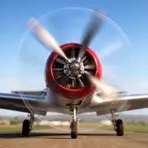
A propeller on a plane that pushes it through the air

A device with angled blades that turns to push a boat or plane forward
How Adjustable
- Specialized

- US
Surface Forms
Morphology
variable-pitch + propeller
The meaning is directly compositional: a propeller (mechanical device with blades) whose pitch is variable. A B1 learner who knows 'variable', 'pitch' (as blade angle), and 'propeller' can infer that the blade angle can be adjusted to optimize performance, so the expression is predictable from its parts.
Etymology
The noun variable-pitch propeller names a propeller whose variable-pitch means the blades can change angle in flight, like a fan whose blades tilt to push more or less air. That's why pilots can 'adjust' the blades to make the engine and plane 'work best' at different speeds.