
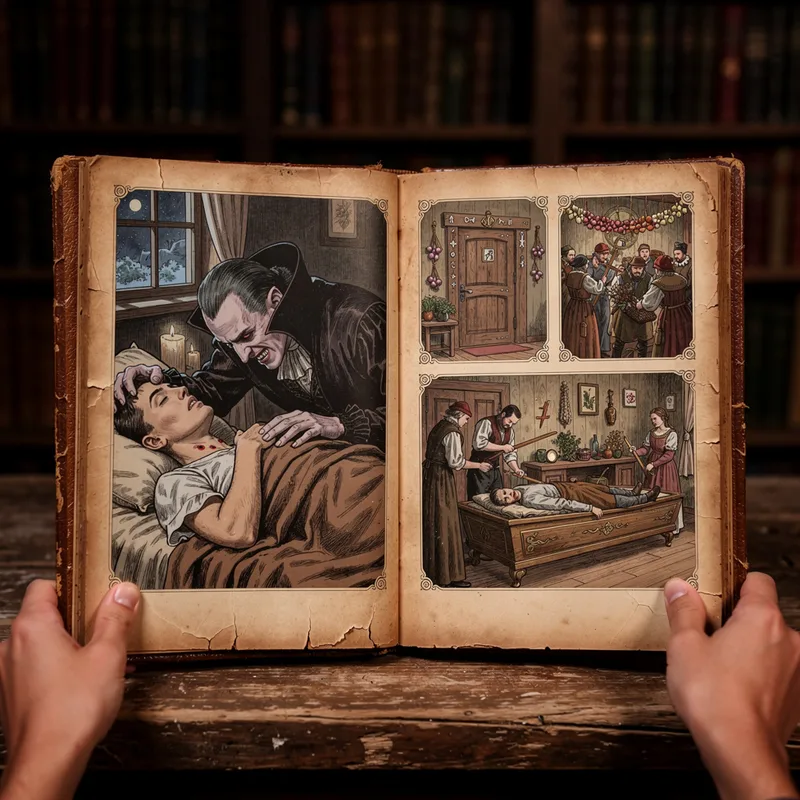
vampirism
 5
8.8

- noun
- /ˈvæmpɪrɪzəm/
- NSFW
- Vampirism is often depicted in literature as a way for characters to gain power and immortality through blood consumption.
- disease of vampirism
Loading YouTube…
Watch on YouTubeLike, it seems like it was a experiment gone wrong, and so we're trying to cure reapers of their vampirism.
- Like, it seems like it was a experiment gone wrong, and so we're trying to cure reapers of their vampirism.
- You know, And now they can all kill it together, including her who's, who's affected with vampirism, you know?
Examples
-
Then vampirism is a genetic defect, just like hemolytic anemia?
Fiction book (1998) -
Rather than a supernatural curse or a religious affliction, vampirism and lycanthropy have both become diseases.
Blog text (27) -
It's the first known case of vampirism.
-
My father is an expert on vampirism.
-
All the other victims contracted vampirism after birth.
Fiction book (1998) -
Vampirism is not a disease, Julia.
-
Here in the Carpathian Mountains, vampirism was an undisputed fact.
-
Thousands had been enslaved by the obscene cult of vampirism.
-
His professional offices enable Dracula to plan an efficient assault on Britain, spreading the disease of vampirism from the property that Harker has helped him purchase.
Academic text (2007) -
In his diagnosis and treatment of Lucy's illness, Van Helsing places vampirism within the context of the new germ theory that had only reached public consciousness by the 1890s.
Academic text (2007)
Surface Forms
Morphology
Etymology
Vampirism comes from vampire plus the ending -ism, and vampire was a Slavic word for a creature that was a 'blood-sucker'. So vampirism means the beliefs or actions about vampires, especially the idea of 'feeding on blood'.