

utterly
 243
3.6

- adverb
- /ˈʌtərli/
- He felt utterly exhausted after a long day at work.
- utterly fail
- utterly unable
- utterly reject
Loading YouTube…
Watch on YouTubeI think this government has utterly failed British women.
- I think this government has utterly failed British women.
- I mean, that was, yeah, that was an utterly devastating time.
- And yet was utterly unable to commit.
- So the world that we live in is utterly sublime and utterly weird.
- It goes from being absurd to utterly sinister and clinically stupid.
- I've never forgotten it and it's utterly ridiculous.
- But as a default presumption, it's just utterly foolish.
- And here's how he closes this For duty without deeds is utterly meaningless.
- What you did connected with people and was utterly powerful.
- So you can wander utterly lost, without signposts or guide.
- Just to feel so utterly amazing.
- So vivid, so secretive, so utterly exact.
Examples
-
You will know what it is to be completely and utterly alone.
-
So the world that we live in is utterly sublime and utterly weird.
-
I think this government has utterly failed British women.
-
Have I been totally and utterly missing in action?
-
Those claims were utterly destroyed the same afternoon.
-
You make me feel so utterly exposed.
-
I was left alone, crying and feeling utterly abandoned.
-
The entire student body was utterly grateful for the improvement in their grades.
-
The whole House will join me in utterly condemning this attack.
-
Anything else is utterly irrelevant and might as well not exist.
Synonyms
 ∞
1.0
Totally, in every way
 ∞
1.0
Completely and without any doubt
 ∞
1.0
To be complete with nothing left out
 ∞
1.0
To a very great degree
 ∞
1.0
Completely, with nothing left out
 ∞
2.2
Completely without leaving anything out
 855
2.3
To a very great degree
 807
1.0
Completely, to show that something is true
 340
1.4
To show strong feeling or degree
 312
1.0
By a very large amount
 257
3.3
Completely with nothing left
 226
7.8
Completely used to show strong emphasis
 141
4.2
Completely, with nothing left to pay
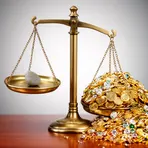 132
4.7
By a very large amount that makes it hard to refuse
 131
3.9
To a much higher level than usual
 112
3.1
To a very large degree
 107
3.5
To a very large degree
 99
3.7
To say something is complete or very strong to make a point
 97
3.0
By a very large amount
 94
2.7
To a very great degree
 92
2.1
To a very great degree
 87
3.1
In a very strong or focused way
 81
3.4
Completely in every way
 69
3.5
To a very large degree
 54
4.6
To a very great degree
 51
3.9
To a very great degree
 49
3.4
To a great degree
 25
4.5
To a very high degree
 16
7.4
To a very large degree
 15
8.0
To a very great degree
 10
2.3
Totally and without any doubt
 8
5.4
To make a describing word much stronger
 6
6.1
Very extreme in every way
 3
5.8
To a very large degree
 1
4.5
Completely, with nothing else causing or helping it
 1
8.4
To a very high degree


 1
6.0
In a complete and direct way, without any doubt
Antonyms


Idioms
How Complete

Surface Forms
Morphology
Etymology
Utterly comes from utter, which once meant 'outside' or 'outermost' and is the same root as out and outer. With the ending -ly, utterly came to mean 'completely', so it shows something is fully the case with nothing left.