
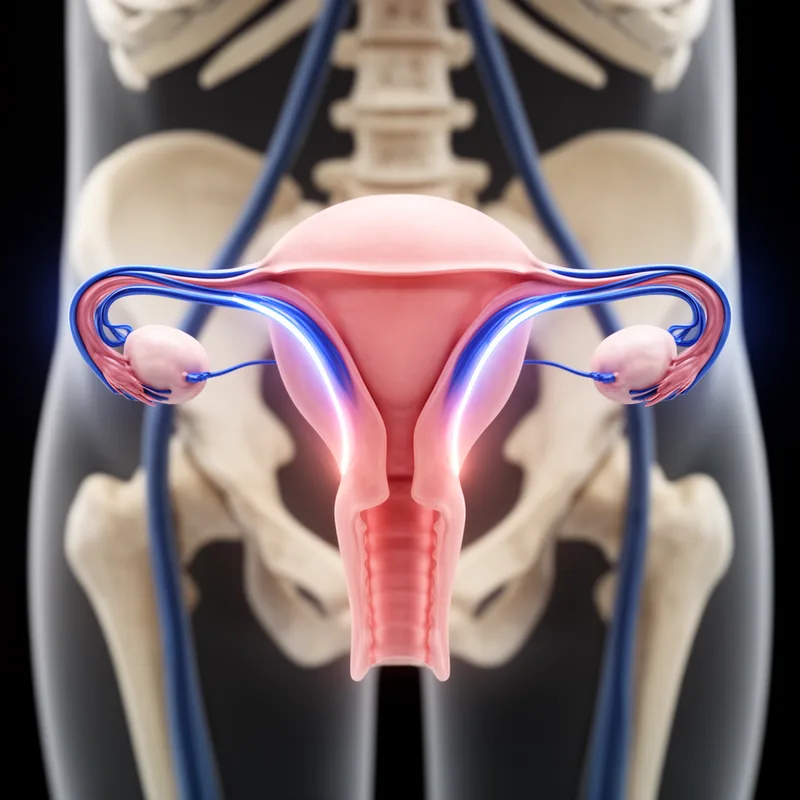
uterine vein


 1
5.7
1
5.7
- noun
- /ˈjuːtərɪn veɪn/
- Specialized
- During pregnancy, the uterine vein increases in size to accommodate greater blood flow.
Examples
-
The uterine vein plays a crucial role in blood circulation.
-
The surgeon carefully isolated the uterine vein before proceeding with the operation.
-
A thrombosis in the uterine vein can lead to serious complications after childbirth.
-
Doctors often examine the uterine veins during surgery.
-
The surgeon carefully avoided the uterine vein during the operation to prevent excessive bleeding.
-
After childbirth, the doctor monitored the uterine vein to ensure proper blood flow back to the heart.
-
An injury to the uterine vein can lead to complications, so it is important for surgeons to be cautious.
Surface Forms
Morphology
The phrase is a straightforward adjectival modifier + noun: 'uterine' (related to the uterus) + 'vein' (a blood vessel), so a learner who knows both words will infer it names a vein associated with the uterus that carries blood. Technical specifics about drainage pathways are specialist knowledge but do not obscure the basic, compositional meaning, which is cross-linguistically transparent.
Etymology
The compound noun uterine vein is a literal name: uterine comes from the word for the 'womb' and vein means a blood vessel, so it is the vein that 'drains' blood from the 'womb'.