
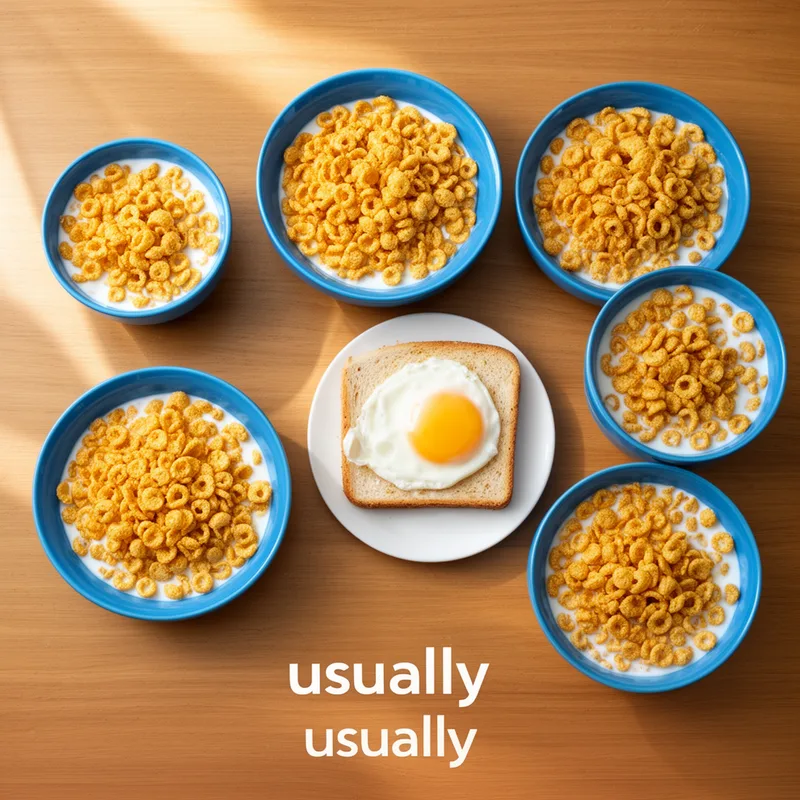
usually
 ∞
1.0
∞
1.0

- adverb
- /ˈjuːʒuəli/
- On weekends, we usually spend time with family and friends.
- usually associated with
- is usually considered
- usually occurs
Loading YouTube…
Watch on YouTubeThose things still give them joy, and that usually means harming you.
- Those things still give them joy, and that usually means harming you.
- And then they die, usually within minutes or hours.
- Brand trips are usually a balance of work and play.
- So the darkest man is usually not as dark as you think.
- Advent calendar is usually lit and here it is.
- And it'll usually take them a couple weeks to read.
- OK, I usually take a break around lunchtime.
Examples
-
Referral to social services is usually followed by an investigation, and often a case conference.
Academic text (2011) -
Libraries and community centers might offer similar opportunities, usually in a less structured format.
Academic text (2011) -
And then they die, usually within minutes or hours.
-
We just went up a hill that we usually walk.
-
Yeah, I usually find one that I like a lot.
-
And they are usually green, yellow, red or black.
-
Brand trips are usually a balance of work and play.
-
The types of information needs are usually indicated by the types of questions people ask.
Academic text (2011) -
It is Thursday, which is usually a rest day for me.
-
My commute is usually three trains, but with the holidays it's four.
Synonyms
 ∞
1.0
∞
1.0
Happens many times
 ∞
1.0
∞
1.0
For the most part
 ∞
1.0
∞
1.0
Usually or in most cases
 884
1.0
884
1.0
In the usual way that people expect
 476
1.0
476
1.0
Happening many times in a short time
 386
1.0
386
1.0
Often at the same or fixed times
 219
1.6
219
1.6
Says something is true most of the time, not about small details
 186
1.0
186
1.0
In most cases
 152
2.1
152
2.1
It is the usual amount when you look at all cases together
 146
3.5
146
3.5
In a regular way without much thought
 98
4.9
98
4.9
Happens many times, usually within a short time
 89
3.4
89
3.4
To say that something is true in most cases
 78
3.0
78
3.0
In most situations
 52
2.6
52
2.6
Happens most of the time
 28
2.8
28
2.8
Usually in most cases
 9
3.7
9
3.7
In most cases

The usual result appears when you look at many things together
Antonyms


How Often

Surface Forms
Morphology
Etymology
Usually comes from the word usual, which comes from the Latin usus meaning 'use' and is the same idea as the English word use. So usually means 'in the normal way' or 'by habit', something that happens in most cases.