
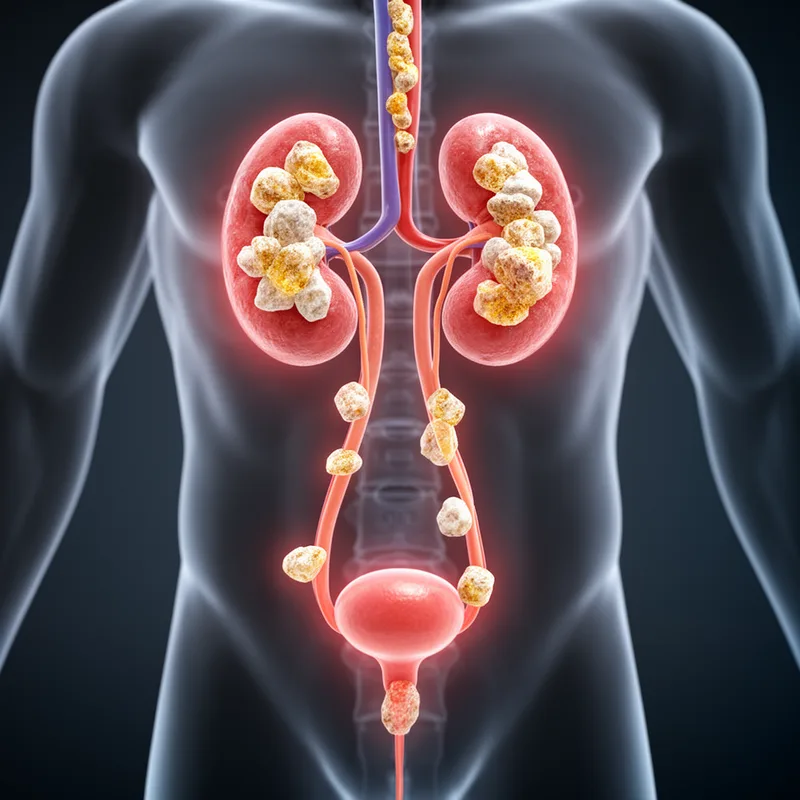
urolithiasis
- noun
- /ˌjʊəroʊlɪˈθaɪəsɪs/
- Specialized
- The patient was diagnosed with urolithiasis last week.
Examples
-
Painful urination can be a symptom of urolithiasis in some patients.
-
The doctor diagnosed him with urolithiasis after reviewing his test results.
-
Treatment for urolithiasis may include medication or surgical removal of the stones.
-
Many individuals suffer from urolithiasis due to dehydration.
-
He was diagnosed with urolithiasis after experiencing severe pain during urination.
-
Symptoms of urolithiasis can include frequent urination and blood in the urine.
-
After suffering from recurrent urinary infections, she underwent tests that confirmed urolithiasis.
Synonyms

Hard, small stones in the kidney that often cause pain

Small hard stones that form in the kidneys
Hard stones form inside an organ like the kidney or gallbladder
Surface Forms
Morphology
urolithiasis = lithiasis (opaque) = uro + lith + iasis
This is a technical medical term composed of Greek combining forms ('uro-' and 'lith-' plus '-iasis') that are unlikely to be known by average B1 learners and thus do not yield a clear everyday meaning.
Etymology
Urolithiasis breaks into uro- ('urine'), lith- ('stone', as in monolith), and -iasis ('condition'). So, it means the condition of having stones in the urine or urinary tract, which is why it describes the formation of urinary stones.

