
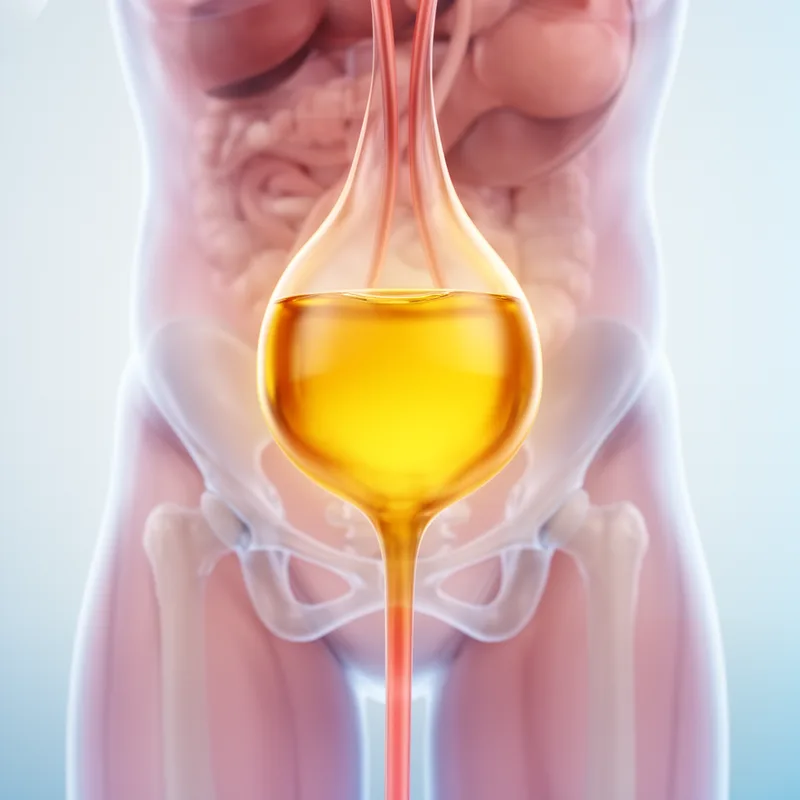
urinary bladder


 1
4.3
1
4.3
- noun
- /ˈjʊrɪˌnɛri ˈblædər/
- Specialized
- One typical example is a person who smokes before going to bed and urinates in the morning, which means that arsenic would be present in the urinary bladder for 7 to 8 hours.
- presence in the urinary bladder
Examples
-
- Malignant neoplasm of the urinary bladder
Blog text (33) -
Cancers of the lung and of the urinary bladder are essentially unknown in childhood.
Academic text (2008) -
This is the urinary bladder here, OK?
-
Below the kidney is the urinary bladder, also in a "U" shape, almost completely up and around the kidney area.
Blog text (10) -
Duration of arsenic presence in the urinary bladder.
Academic text (2008) -
Cystitis is inflammation of the urinary bladder due to infection with some bacteria.
Blog text (24) -
The small intestine crosses over the large intestine approximately in the center and reaches over and through the urinary bladder and the kidney sections.
Blog text (10) -
The largest amount of inhaled arsenic reaches the urinary bladder within a few minutes, without or with minimal transformation in the liver.
Academic text (2008) -
The urinary bladder stores urine until it is time to go to the bathroom.
-
Inflammation of the urinary bladder can cause pain and discomfort during urination.
Synonyms
 118
3.1
118
3.1
A hollow flexible bag that holds liquid, air or gas in bodies and devices
Surface Forms
Morphology
The meaning is directly and transparently derived from 'urinary' (related to urine) and 'bladder' (an organ that stores liquid), so a learner who knows both constituents will understand this as the bladder that stores urine. This is a straightforward, compositional noun phrase following common compounding patterns found across languages, making it immediately comprehensible to B1 learners.
Etymology
Urinary bladder gives a clear picture: bladder was an old word for a small bag or sac that holds liquid, and urinary shows it holds urine. So urinary bladder simply means 'a sac in the body that stores urine'.