
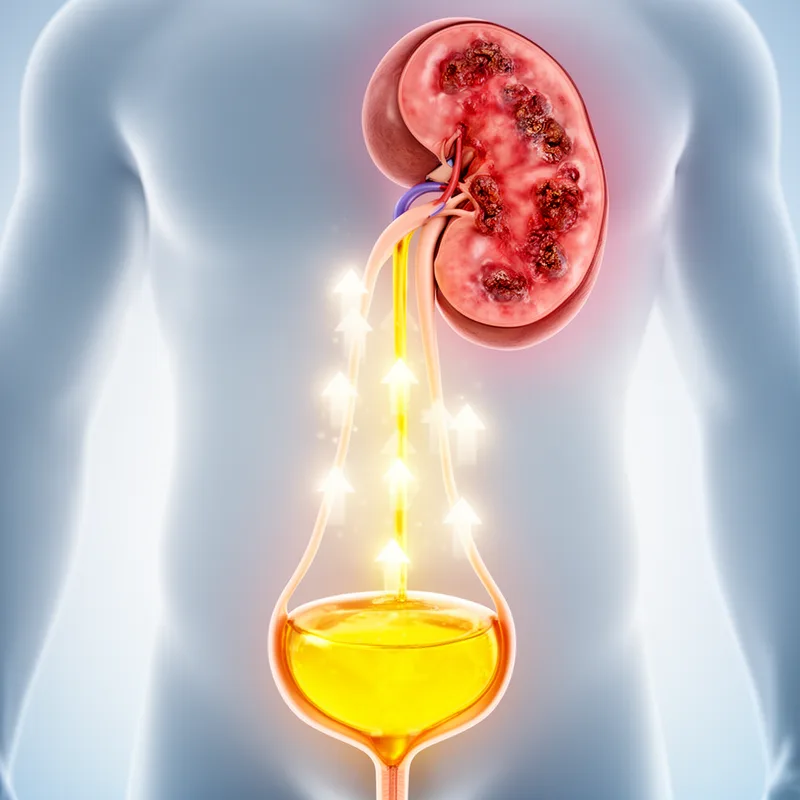
ureterorenal reflux
- noun
- /ˌjʊərɪtəʊrəˈniːl ˈriːflʌks/
- Specialized
- Chronic ureterorenal reflux can cause scarring of the kidney tissue over time.
Examples
-
Doctors detected ureterorenal reflux during tests for recurrent kidney infections.
-
Treatment for ureterorenal reflux often involves surgery to prevent further urinary backflow.
-
Patients with ureterorenal reflux often experience kidney pain.
-
The doctor diagnosed her with ureterorenal reflux last week.
-
Doctors detected ureterorenal reflux during tests for recurrent kidney infections.
-
Chronic ureterorenal reflux can cause scarring of the kidney tissue over time.
-
Treatment for ureterorenal reflux often involves surgery to prevent further urinary backflow.
Surface Forms
Morphology
ureterorenal + reflux
The term is formed from identifiable medical elements: uretero- (ureter) + renal (kidney) and reflux (backflow), so the overall meaning — backflow of urine from the ureter into the kidney — is compositionally derivable if a learner knows those morphemes. However, the vocabulary is highly technical and the concatenated form 'ureterorenal' (and medical combining forms in general) may not be immediately obvious to an average B1 learner, so full transparency is limited.
Etymology
Ureterorenal reflux is a medical name that shows a clear picture: ureter is the tube from the kidney and renal means 'kidney', while reflux means 'flowing back'. Imagine urine going up the tube into the kidney instead of down to the bladder, and this image explains why it means 'urine backflow that can harm the kidney'.

