
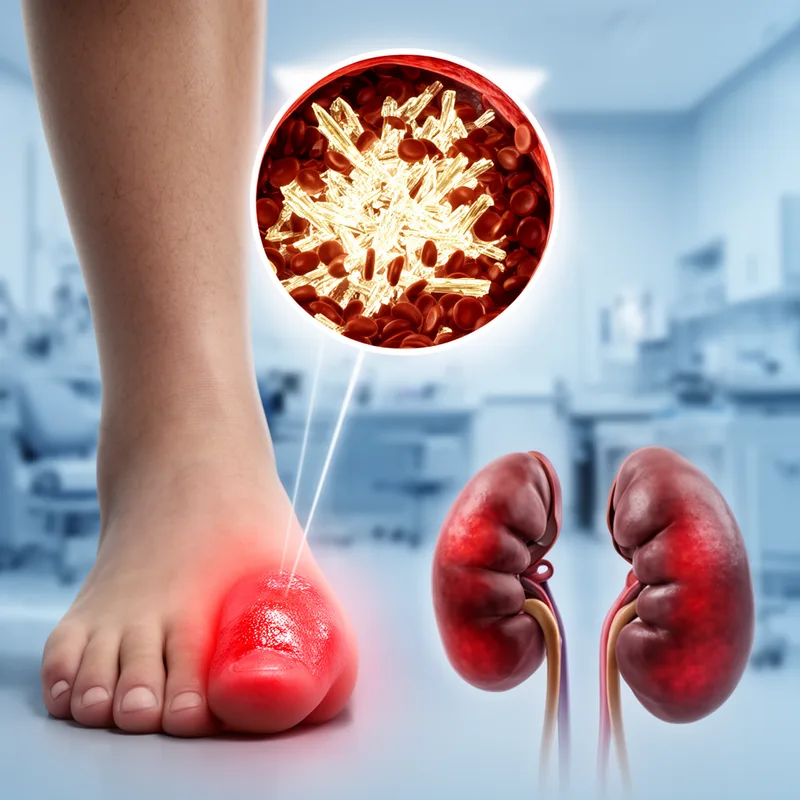
uratemia
- noun
- /ˌjuːrəˈtiːmiə/
- Specialized
- Untreated uratemia can lead to painful joint inflammation and kidney problems.
Examples
-
Medications and dietary changes are often prescribed to manage uratemia in patients with chronic gout.
-
The doctor ordered blood tests to check for uratemia as part of the patient's gout diagnosis.
-
The patient was diagnosed with uratemia after the tests.
-
High levels of uric acid can lead to uratemia.
-
The doctor ordered blood tests to check for uratemia as part of the patient's gout diagnosis.
-
Medications and dietary changes are often prescribed to manage uratemia in patients with chronic gout.
-
Untreated uratemia can lead to painful joint inflammation and kidney problems.
Synonyms

 1
9.9

A higher than normal amount of uric acid in the blood
How High

Surface Forms
Morphology
uratemia = ur + emia
The components 'ur' and 'emia' are not standalone English words, and the meaning is not directly derivable without specialized knowledge.
Etymology
The word uratemia comes from urate, a salt related to urine, and the ending -emia meaning 'blood'. So uratemia means having uric acid salts in the blood, which is why it often links to gout and kidney problems.