
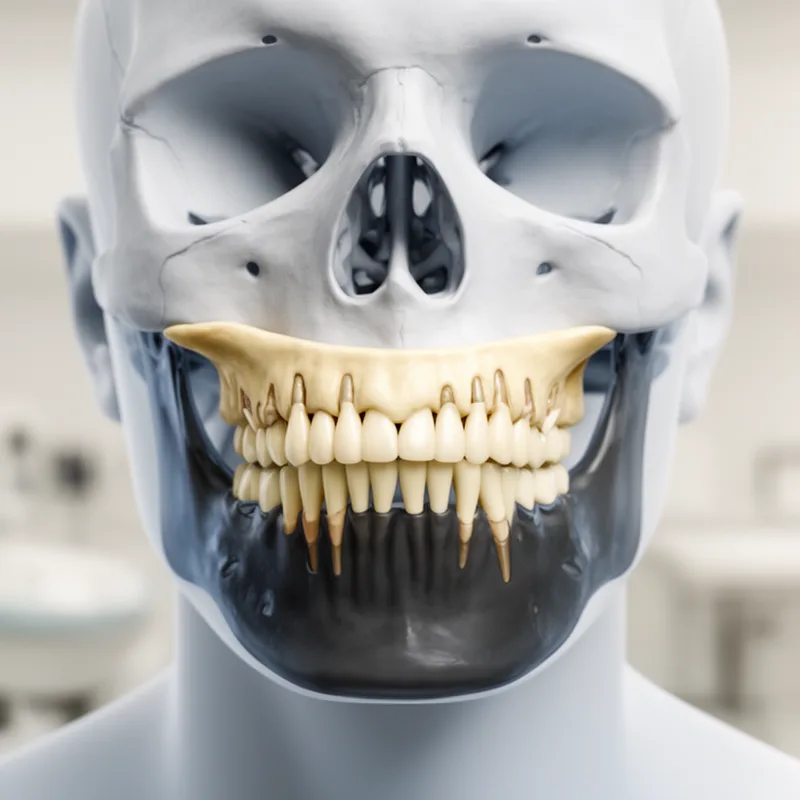
upper jawbone


 1
4.2
1
4.2
- noun
- /ˈʌpər ˈdʒɔːboʊn/
- The dentist examined the patient’s upper jawbone for signs of infection.
Examples
-
The x-ray revealed a fracture in her upper jawbone after the accident.
-
In birds, the upper jawbone is specially adapted for feeding.
-
The upper jawbone supports the teeth.
-
Many animals have a strong upper jawbone.
-
The surgeon carefully examined the patient's upper jawbone before performing the dental procedure.
-
Researchers analyzed the upper jawbone of the ancient fossil to learn more about its diet and habitat.
-
During the anatomy class, the students studied the structure of the upper jawbone in vertebrates.
Synonyms
 3
8.6
3
8.6
The upper jaw that holds the top teeth
 2
2.8
2
2.8
The top part of the jaw that holds the upper teeth
 1
9.5
1
9.5
The bone of the upper jaw that holds the upper teeth
Surface Forms
Morphology
The meaning is directly and transparently derived from 'upper' (situated toward the top) modifying 'jawbone' (the bone forming the jaw), so it straightforwardly denotes the jawbone at the top of the mouth. This adjective+noun compounding follows common compositional patterns across languages, making it easily inferable for a B1 learner who knows both constituents.
Etymology
Upper jawbone is a name that gives a clear picture: upper means the top and jawbone is the bone that holds the teeth, so it is the bone at the top of the mouth. That's why it refers to the bone forming the upper part of the jaw, often joined to the 'skull'.