

unthinkable
 89
5.7
89
5.7

- adjective
- /ʌnˈθɪŋkəbl/
- For him to admit he was wrong about the project was unthinkable just a few months ago.
- almost unthinkable
- virtually unthinkable
- literally unthinkable
Loading YouTube…
Watch on YouTubeSome of them seemed even unthinkable a few days ago.
- Some of them seemed even unthinkable a few days ago.
- There is nothing unthinkable in such a supposition.
- It was simply unthinkable, but it did come to pass.
- They allowed criticism of the regime that had been unthinkable until that time.
- At the price, this kind of build quality would have been unthinkable a couple of years ago.
- How can God permit such insidious levels of unthinkable suffering?
- Heads must roll within the IOC to account for this unthinkable justice against women.
- We was unthinkable in Ecuador's recent history.
- I mean, you know, a divorce was kind of was unthinkable.
Examples
-
At the price, this kind of build quality would have been unthinkable a couple of years ago.
-
In fact, it was unthinkable to her that I should even love him in vain.
Fiction book (1992) -
Some of them seemed even unthinkable a few days ago.
-
All right, the unthinkable has happened.
-
At any point, the unthinkable could happen.
-
The unthinkable had suddenly become reality.
-
Events are taking place today that were unthinkable even six months ago.
Academic text (1990) -
If you blind a country for 24 hours, the loss of life is unthinkable.
-
Continuing such poor performance for a decade or more is virtually unthinkable in a democracy.
Academic text (2012) -
They allowed criticism of the regime that had been unthinkable until that time.
Synonyms
 432
4.9
432
4.9
Very surprising and almost impossible to accept as true
 288
4.4
288
4.4
So silly or unreasonable that it makes no sense
 108
3.3
108
3.3
A person who is very difficult to deal with
 63
5.4
63
5.4
So strange or large that people cannot believe it
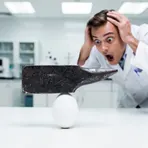 46
7.4
46
7.4
Impossible to imagine or believe

Too hard or unpleasant to accept
Antonyms

How Thinkable

Surface Forms
Morphology
Etymology
Unthinkable comes from three simple parts: un- ('not'), think ('to form an idea in your mind'), and -able ('can be'). So, it literally means 'not able to be thought of', which is why we use it for something impossible to imagine or accept.