
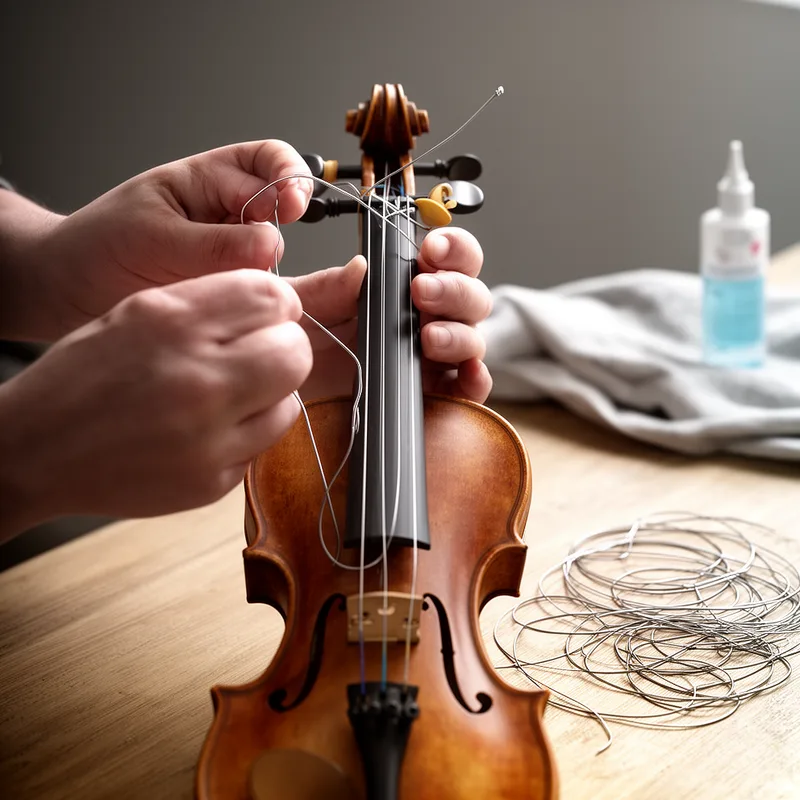
to unstring
- verb
- /ʌnˈstrɪŋ/
- You should unstring your guitar after a performance to keep the strings in good condition.
Examples
-
I have spent my days in stringing and unstringing my instrument.
Blog text (26) -
Going back and forth in all that anxiety unstrings a person.
Fiction book (1998) -
And the song I meant to sing remains unsung, for I've spent my days stringing and unstringing my instrument,
-
And the song I meant to sing remains unsung, for I've spent my days stringing and unstringing my instrument,
-
And the song I meant to sing remains unsung, for I've spent my days stringing and unstringing my instrument.
-
It unstrings my muscles.
Fiction book (1995) -
Before playing the cello, it is important to unstring the instrument to clean it properly.
-
She decided to unstring her bow after finishing the archery practice.
Antonyms


Surface Forms
Morphology
Etymology
Unstring is made from the prefix un- meaning 'remove' or 'do the opposite' and string, the 'cord' that stretches across a musical instrument or a bow. So to unstring something is literally to take off its strings, which is why we use it for removing strings from a guitar, violin, or bow.