
unsoftened
- adjective
- /ʌnˈsɔfənd/
- Specialized
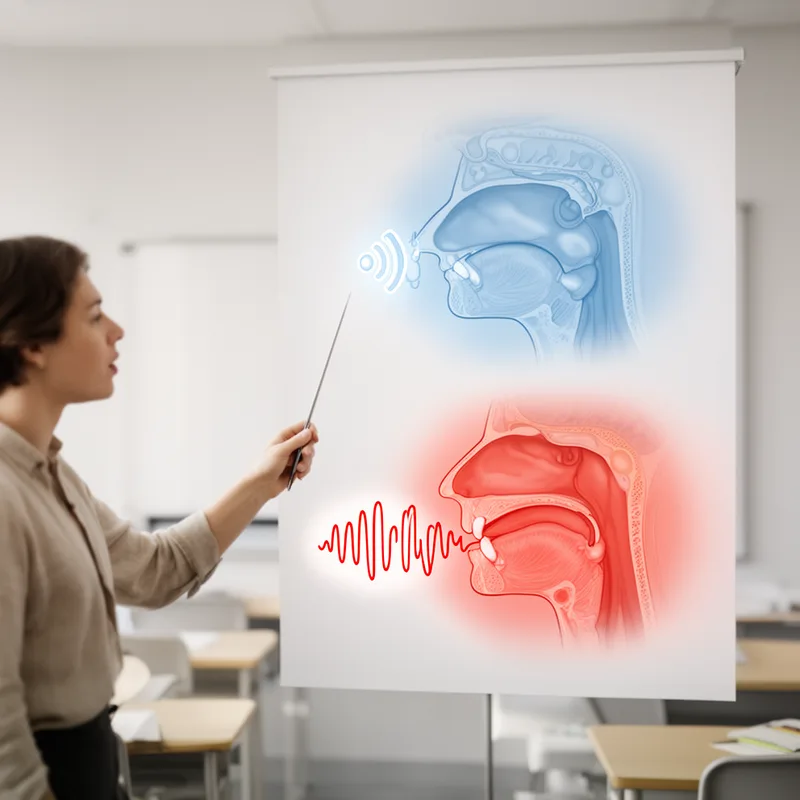
- In Russian, the consonant unsoftened 't' sounds harder than its palatalized counterpart.
Examples
-
Some languages make a clear distinction between unsoftened and palatalized sounds.
-
The sound was distinctly unsoftened in the recording.
-
The linguist explained how unsoftened consonants differ from their softened forms in pronunciation.
-
The teacher emphasized the unsoftened consonants during the lesson.
-
In Russian, the consonant unsoftened 't' sounds harder than its palatalized counterpart.
-
The linguist explained how unsoftened consonants differ from their softened forms in pronunciation.
-
Some languages make a clear distinction between unsoftened and palatalized sounds.
Antonyms

Surface Forms
Morphology
unsoftened = softened (transparent) = un + soften + ed
The prefix 'un-' negates the adjective 'softened' in a phonetic sense, so the structure is literal and predictable.
Etymology
Unsoftened comes from un- 'not' and soften 'to make soft', and in speech 'soft' often means a sound changed by the tongue, so an unsoftened consonant is 'not softened' and therefore sounds harder.

