
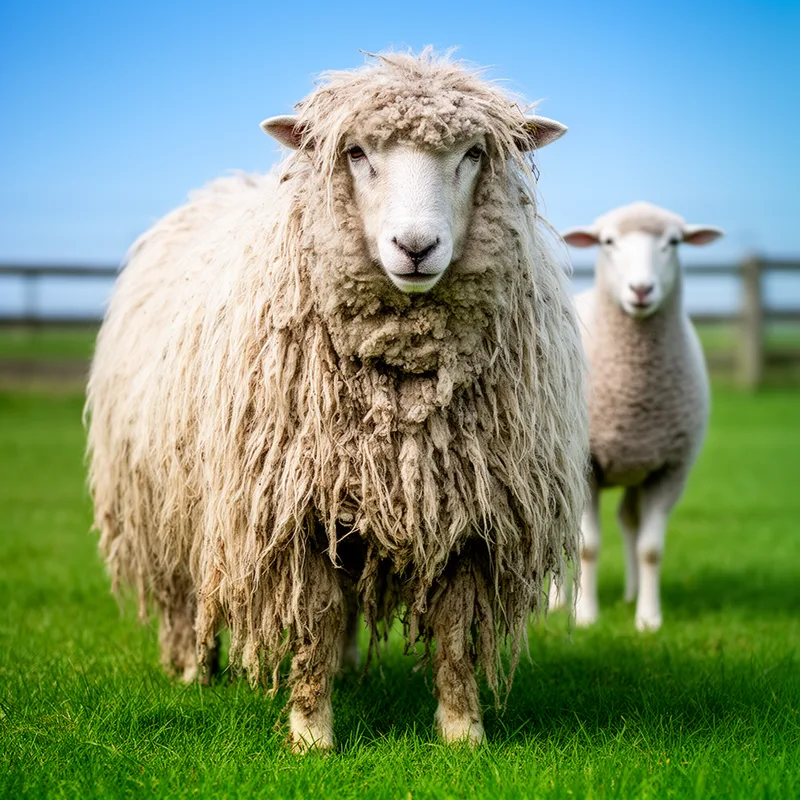
unshorn
 1
7.4
1
7.4

- adjective
- /ʌnˈʃɔrn/
- Sometimes the hair fell into her food when she was eating, which he found off-putting (why didn't she just tie it back?), it always whipped him across the face at some point when they were making love, and on sultry days in the summer, she looked sweaty and hot as an unshorn sheep in a sauna.
- unshorn hair
- unshorn lambs
Examples
-
In the meadow, the sheep grazed peacefully, their wool thick and unshorn until shearing time came.
-
"The shepherd permits the sheep to leave his fold but not unshorn.
Blog text (1) -
Leaving orders for her management, I went off for a few days to seek other amusements—preferably some diversions as yet unshorn.
Fiction book (1999) -
The unshorn fields, boundless and beautiful" (Bryant 147)—and most importantly, uninhabited.
Academic text (2012) -
Pure Sikhs were those who belonged to the Khalsa and wore the five signs of Sikhism, including the unshorn hair (and thus the turban), the dagger, and the steel bangle.
Academic text (1996) -
The groom decided to keep his beard unshorn for the big day to give him a rugged look.
-
The artist portrayed a wild character with unshorn hair to symbolize his free-spirited nature.
Synonyms
 6
3.9
6
3.9
Left in its natural state without being cut or trimmed
 1
3.8
1
3.8
Not cut and kept messy, like a beard or hedge
An animal with thick natural wool or fur still on it

Not cut or trimmed and left as it is
Antonyms


How Trimmed

Surface Forms
Morphology
unshorn = shorn (transparent) = un + shorn
Meaning is a straightforward negation: 'un-' (not) + 'shorn' (not sheared), so the overall sense is directly derived.
Etymology
Unshorn is made of un- meaning 'not' and shorn from shear meaning 'to cut', especially hair or wool. So unshorn literally means 'not cut', which helps you remember it describes hair or a sheep's wool left long and untidy.