
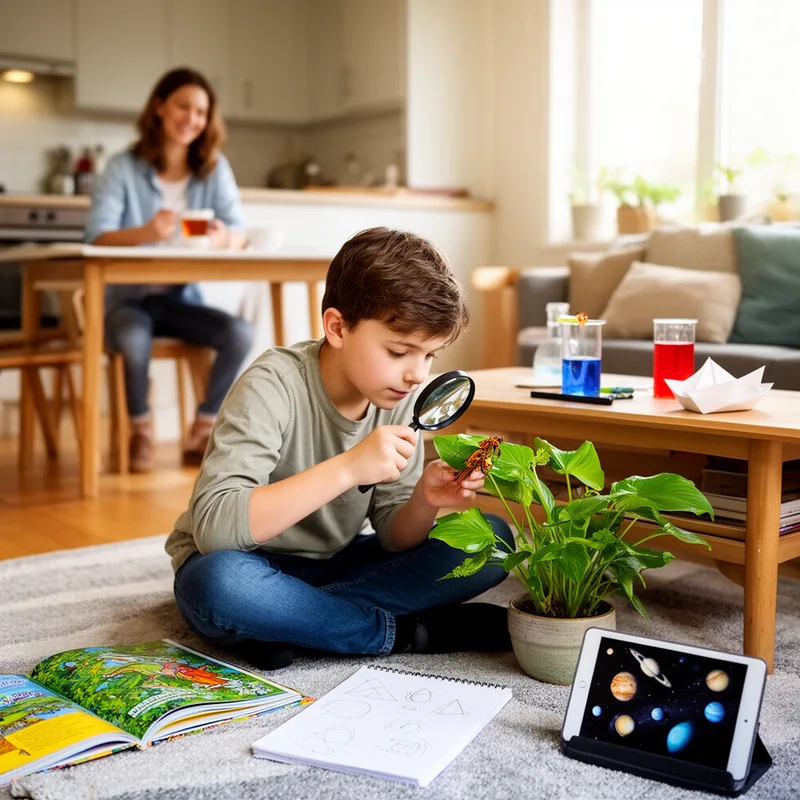
to unschooling
- verb
- /ʌnˈskuːlɪŋ/
- She decided to unschool her children to foster their natural curiosity and interests.
Examples
-
I interviewed somebody recently who does unschooling with his child, which is the much more free, less curriculum based homeschooling style.
-
It's tricky because what John means by unschooling is learning that doesn't have to take place at home and that doesn't look like school.
-
So as an example, he unschools his kids.
-
Many parents choose to unschool their kids, allowing them to learn through hands-on experiences.
-
By unschooling, he lets his children explore topics they are passionate about, instead of following a rigid syllabus.
Synonyms

 26
3.5
26
3.5

To teach a child at home instead of sending them to school
 1
8.7
1
8.7
To help someone learn outside school without a set curriculum by letting them follow their own interests
Antonyms

How Structured
572
1.0

Surface Forms
Morphology
Etymology
Unschooling comes from un- ('not') and schooling, so it means to let a child learn outside the formal school system. That's why to unschool someone is to follow the child's interests and everyday life rather than a set curriculum.