
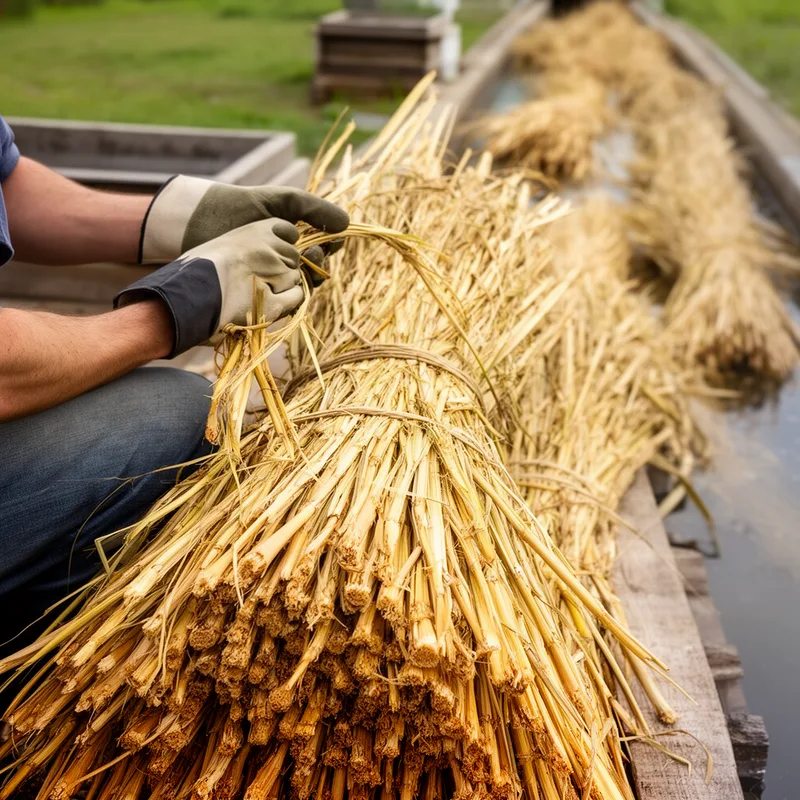
unretted


 1
9.9
- adjective
- /ʌnˈrɛtɪd/
- Specialized
- Processing unretted flax requires more effort than using retted material.
Examples
-
The factory could not use the unretted hemp because the fibers were still too tough.
-
Farmers stored the unretted stalks until they were ready for the retting process.
-
The fibers were still unretted after the harvest.
-
Why are these plants unretted?
-
Farmers often collect unretted plant fibers to ensure a higher yield during processing.
-
The unretted fibers can be used directly for making ropes and textiles without fermentation.
-
Using unretted materials can sometimes produce stronger textile products compared to those that have been retted.
Synonyms
 1
5.6
Not rotten and still fresh, like leaves or wood
 1
6.7
Not rotted or broken down and remaining as it was
How Retted
1
4.4

- Specialized
1
9.9
Surface Forms
Morphology
unretted = retted (transparent) = un + rett + ed
The adjective is a straightforward negation formed by adding the productive prefix 'un-' to the participial adjective 'retted'; meaning is directly the opposite of 'retted'.
Etymology
Unretted breaks into un- meaning 'not' and retted, from retting, the process of soaking or controlled 'rotting' of plant stems to free the fibers, much like the everyday word rot. So unretted means the stems have not been through that soaking 'rotting' and the fibers are still tough.