

unrepresented
 3
6.0
3
6.0

- adjective
- /ˌʌnrɪˈprɛzɛntɪd/
- Many unrepresented individuals struggle to have their voices heard in community meetings.
- unrepresented groups
- unrepresented species
- unrepresented person
Loading YouTube…
Watch on YouTubeOne is trying not to continue to have underserved populations who are unrepresented in research and in medicine.
- One is trying not to continue to have underserved populations who are unrepresented in research and in medicine.
Examples
-
The consequences when any interest group goes unrepresented in government are surely predictable: it will not fare very well.
Academic text (1994) -
The rule requires a lawyer who acts in that capacity to confirm to unrepresented parties that the lawyer is not representing them.
Academic text (2002) -
The comment to the rule adds that "the lawyer should not give advice to an unrepresented person other than the advice to obtain counsel."
Academic text (1997) -
And consider that nationally, 40% of the 35 million in California are effectively unrepresented.
Blog text (16) -
One is trying not to continue to have underserved populations who are unrepresented in research and in medicine.
-
One approach to increasing participation by unrepresented groups might be to use specific messages on the banner ads.
Academic text (2005) -
At the time Turner reached the Court in 2011, South Carolina regularly incarcerated unrepresented parents for civil contempt.
Academic text (2017) -
Just as the Supreme Court recognized in Turner, the judges noted that custodial parents were almost always unrepresented.
Academic text (2017) -
Courts across the country are already experimenting with using clerks or assistants to aid unrepresented litigants.
Academic text (2017) -
The panel discussed the challenges faced by unrepresented groups in accessing essential services.
Synonyms
 119
3.6
119
3.6
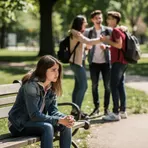
Feeling sad because others do not include you
Antonyms

How Represented

Surface Forms
Morphology
unrepresented = represented (transparent) = un + represent + ed
The adjective 'represented' (represent + -ed) is negated by the productive prefix 'un-', so the meaning is directly derivable.
Etymology
Unrepresented starts with un- meaning 'not' and the part represent comes from a word meaning 'to make present' or 'to speak for someone', the same idea found in present. So unrepresented describes people or groups who are 'not shown' or 'have no one to speak or act for them', which is why we use it when they lack a voice or place.