
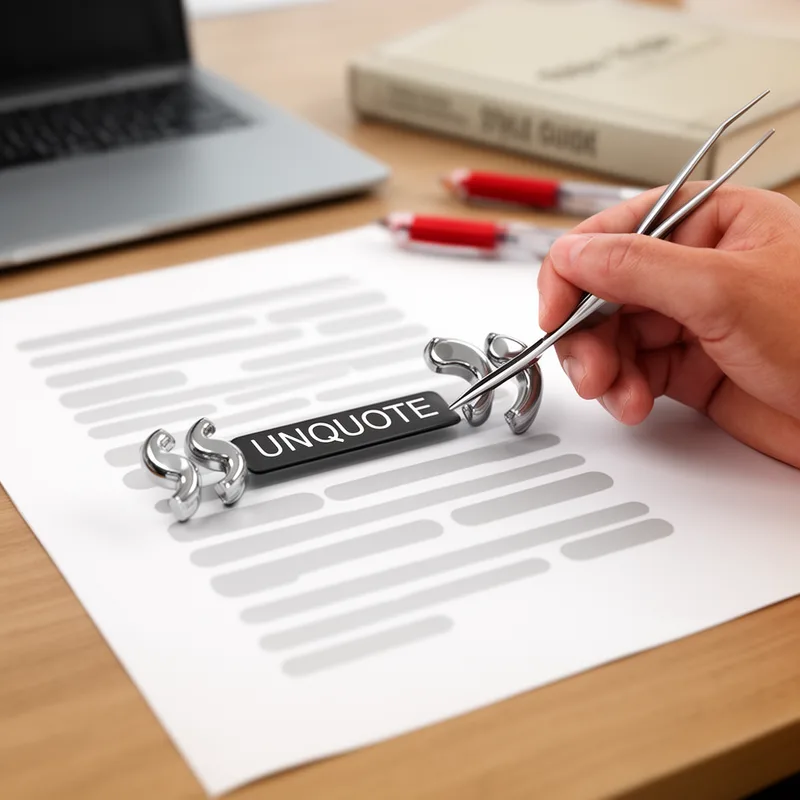
to unquote


 1
6.7
1
6.7
To remove the marks around words that show someone else's exact words
- verb
- /ʌnˈkwoʊt/
:
quitar comillas
- He decided to unquote the statement during his presentation to emphasize his point.
Examples
-
To make the report more readable, you should unquote any unnecessary citations.
-
Please unquote the author's name in the draft before publication.
-
The editor asked me to unquote the phrase to match the style guide.
-
If you unquote the title, it will look more consistent with the rest of the text.
-
Please unquote the phrase in your report.
-
The editor decided to unquote the author's remarks.
-
Please unquote the phrase so we can see the original text clearly.
Idioms

Surface Forms
Morphology
Etymology
Unquote comes from the parts un- 'remove' and quote 'to put in quotation marks'. So to unquote a word or phrase in writing is to take it out of the quotation marks.