
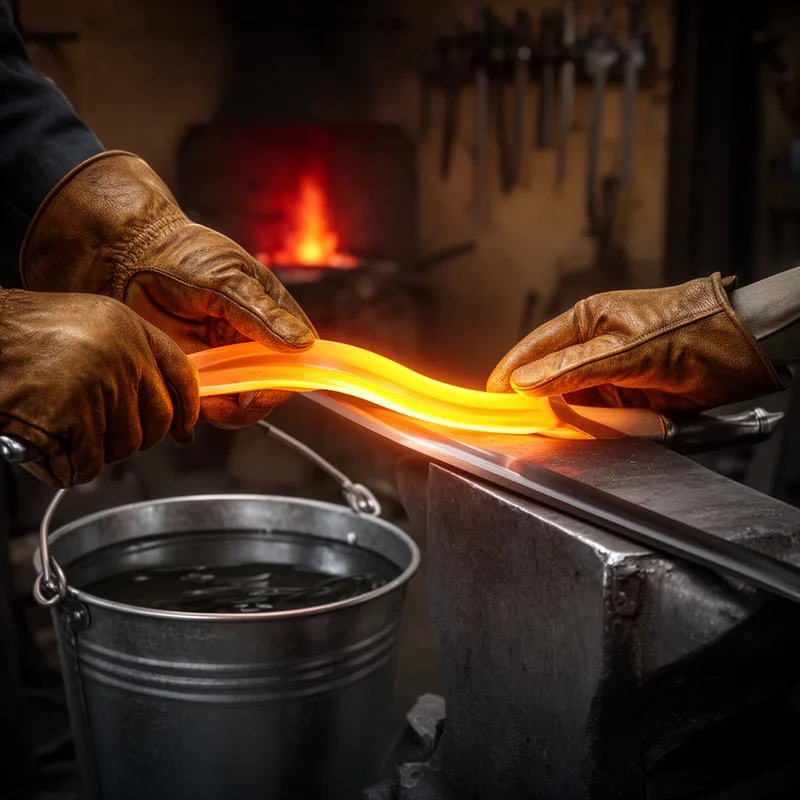
unquenched
- adjective
- /ʌnˈkwɛnʧt/
- Specialized
- The blacksmith explained that unquenched steel is easier to shape but less durable.
Examples
-
The sword remained unquenched, making it softer and more flexible than a hardened blade.
-
If the glass is left unquenched, it may be more prone to breaking under stress.
-
The unquenched metal was still malleable.
-
An unquenched glass can shatter easily.
-
The blacksmith demonstrated how unquenched steel is much softer and easier to manipulate.
-
An unquenched glass can form unique shapes but may lack the strength of tempered glass.
-
If left unquenched, the metal remains malleable and suitable for crafting intricate designs.
Synonyms
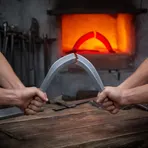
Not made hard and strong by heating

Not fully solid after making, like metal or mortar
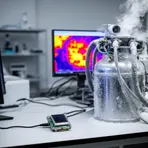
Not kept cold and without a cooling system, for example in cameras or sensors
Antonyms

How Hardened


Surface Forms
Morphology
unquenched = quenched (semi-transparent) = un + quench + ed
Morphologically straightforward (un- + quenched), but the specific technical sense 'not subjected to a quenching process' requires domain knowledge, so predictability for an average learner is limited.
Etymology
Unquenched comes from the verb quench, which in work with metal or glass means 'to cool quickly' to make a piece hard. So unquenched means not cooled that way and stays softer and easier to shape.