

to unfinish
- verb
- /ʌnˈfɪnɪʃ/
- Specialized
- After years of use, they chose to unfinish the table to restore its original wood surface.
Examples
-
You should unfinish the cabinet to remove the damaged varnish before applying a new coat.
-
The craftsman decided to unfinish the old chair before repainting it.
-
He decided to unfinish the old table.
-
The craftsmen unfinish the wood before applying a new coat.
-
The craftsman decided to unfinish the old chair before repainting it.
-
You should unfinish the cabinet to remove the damaged varnish before applying a new coat.
-
After years of use, they chose to unfinish the table to restore its original wood surface.
Synonyms
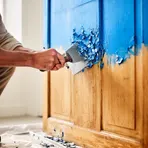
To remove a layer of colour from a wall or other surface

Wear away the surface of something by rubbing or scraping
Antonyms


How Finished

Surface Forms
Morphology
Etymology
Unfinish is also made from un- and finish, but here un- means 'remove' (as in unwrap) and finish means a 'top coat' like paint or varnish. That's why to unfinish a chair is to take off its varnish or paint and show the raw wood underneath.