
unenforceable
 7
7.7
7
7.7

- adjective
- /ˌʌnɪnˈfɔːrsəbl/
- Formal
- Many experts believe that the new regulations are largely unenforceable in practice.
- unenforceable agreement
- unenforceable laws
- unenforceable standards
Loading YouTube…
Watch on YouTubeSo they just move the goal posts and it's totally unenforceable for the most part.
- So they just move the goal posts and it's totally unenforceable for the most part.
- I think a government ban would be largely unenforceable, frankly, on Bitcoin, being that it's pure information.
Examples
-
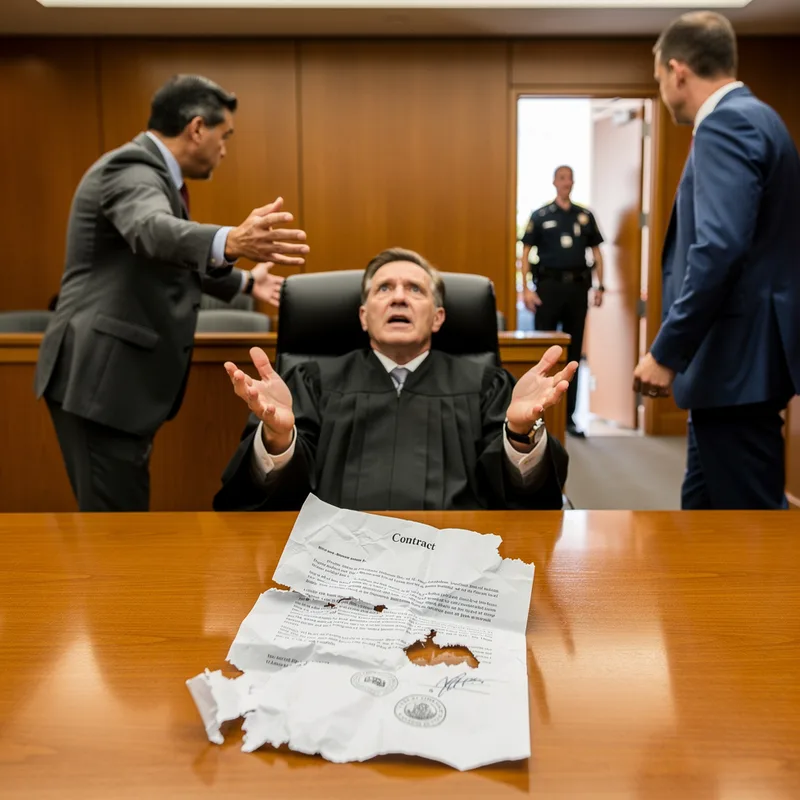
The agreement was deemed unenforceable by the court due to lack of mutual consent.
-
But if Archbishop Pilarczyk is right, our problem is that canon law is essentially unenforceable.
Academic text (2004) -
So they just move the goal posts and it's totally unenforceable for the most part.
-
One response is to hold that the non disclosure agreement is should be unenforceable as against public policy.
-
As with the laws in Mall, the American law is unenforceable.
Academic text (1995) -
I think a government ban would be largely unenforceable, frankly, on Bitcoin, being that it's pure information.
-
The uproar, the possible damage to trade, plus the fact that taxes are clearly unenforceable finally forces the British government to back down.
-
Another doctrine holds that contracts are unenforceable to the extent that they are contrary to public policy.
Academic text (2018) -
A contract can be deemed unenforceable when the terms are patently unfair to one of the parties.
Blog text (20) -
Although such a clause would certainly limit tenant rights under the warranty of habitability, it is unenforceable in some states.
Academic text (1991)
Synonyms

Not in effect and without legal force
Not legally valid so it cannot be enforced
Antonyms

How Enforceable

Surface Forms
Morphology
unenforceable = enforceable (transparent) = un + enforce + able
The adjective is formed by negating 'enforceable' (enforce + -able) with 'un-', so the meaning 'not able to be enforced' is directly derived.
Etymology
Unenforceable breaks into un- 'not', enforce 'to put into force', and -able 'can', and enforce is like the common word force meaning 'power'. So a law or rule that is unenforceable is 'not able' to be made to work or to make people follow it by law or power.