
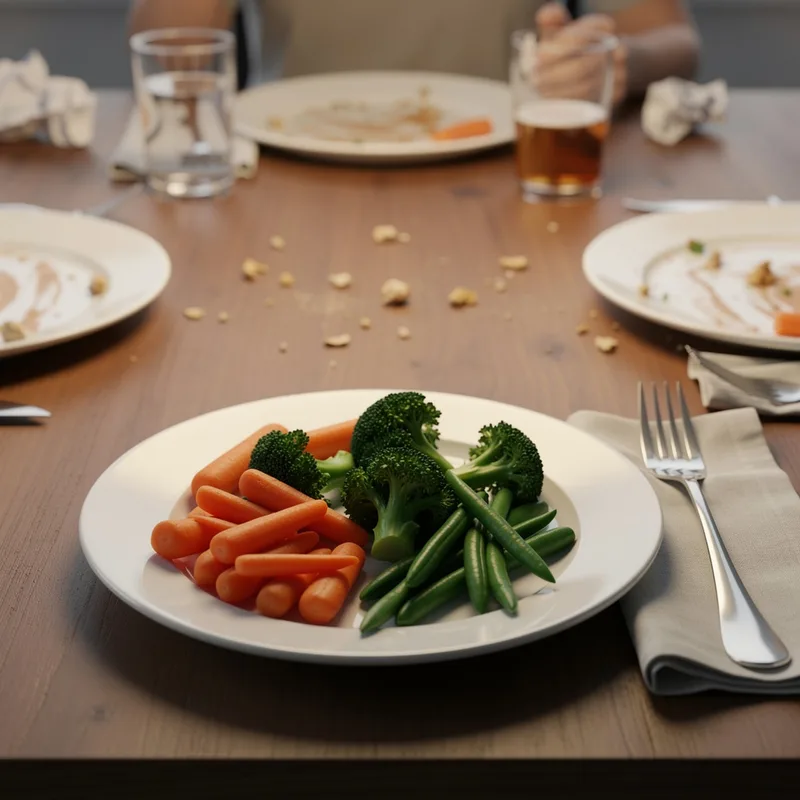
uneaten
 5
1.0
5
1.0

- adjective
- /ʌnˈiːtən/
- Nawaf was still in the bathroom, and the sandwiches they had ordered were still on the table, uneaten.
- uneaten food
- uneaten sandwich
- uneaten meal
Loading YouTube…
Watch on YouTubeI cannot believe that Donald Trump would have two uneaten Starbursts in his pocket.
- I cannot believe that Donald Trump would have two uneaten Starbursts in his pocket.
- My boss told me to get to work and gave her her uneaten Donuts.
- That explains that explains why you're so Halloween would come and there'd be not sweet left uneaten.
Examples
-
It's always a tragedy when a pizza goes uneaten.
-
Outside, the daily bag of uneaten muffins sits by the trash.
Fiction book (1999) -
But many fruits end up on the forest floor uneaten.
Academic text (2002) -
Both men stare at the uneaten food on their plates.
Fiction book (2002) -
Then Emma notices a bowl of uneaten cat food.
Fiction book (2002) -
The entrees have been served: mostly uneaten, they remain beautiful works of culinary art.
Fiction book (2000) -
Joseph sat back, his feet dangling from the aeroplane seat, and looked at the largely uneaten food on the tray.
Fiction book (1992) -
Louis and Lestat are sitting at a sumptuous table, piled with uneaten food.
Fiction book (1994) -
Trays of uneaten food pile up, whiteboards become colored with scribbled questions.
Fiction book (1997) -
It's always a tragedy when a pizza goes uneaten.
Synonyms
 8
2.1
8
2.1
Not eaten or drunk and still left as it was


 1
4.5
1
4.5
Something left because no one ate or used it
 1
7.8
1
7.8
Not yet tried by eating or drinking
How Eaten

Surface Forms
Morphology
uneaten = eaten (transparent) = un + eat + en
The word 'uneaten' is transparently derived from 'eaten' by adding the prefix 'un-', indicating the negation of the state of being eaten.
Etymology
Uneaten is made from the part un- meaning 'not' and the verb eat, so it describes food that is 'not eaten'.