
uncountably
- adverb
- /ʌnˈkaʊntəbli/
- Specialized
 :
incontablemente
:
incontablemente
- In English, the word 'information' is used uncountably and does not have a plural form.
Examples
-
Some nouns, like 'furniture', are treated uncountably in grammar and do not take an 's' for plural.
-
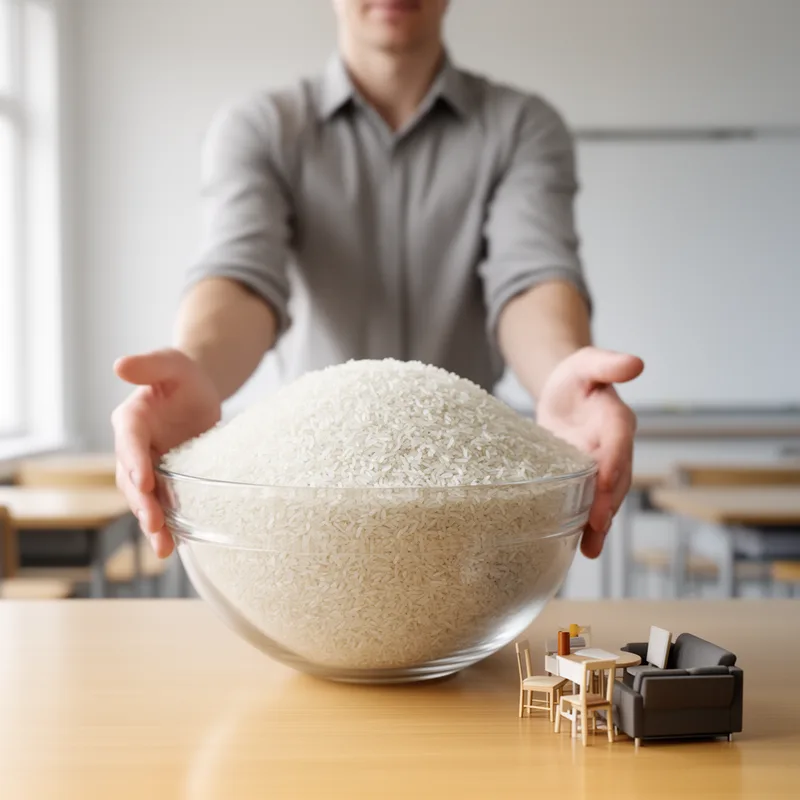
The teacher explained that 'rice' is almost always used uncountably in English sentences.
-
Some nouns, like 'furniture', are treated uncountably in grammar and do not take an 's' for plural.
-
Sand is uncountably present on the beach.
-
Is sugar uncountably used in cooking?
-
In English, the word 'information' is used uncountably and does not have a plural form.
-
The teacher explained that 'rice' is almost always used uncountably in English sentences.
Antonyms

Surface Forms
Morphology
uncountably = uncountable (transparent) = un + count + able + ly
Derived by adding '-ly' to 'uncountable' (un- + count + -able); the adverbial formation is regular and signals manner.
Etymology
Uncountably breaks into un- 'not', count 'to number', and -ly 'in a way'. In grammar it means we treat something as a whole, not as separate things, so words like 'information' or 'furniture' are used uncountably because we do not give them a plural number.

