
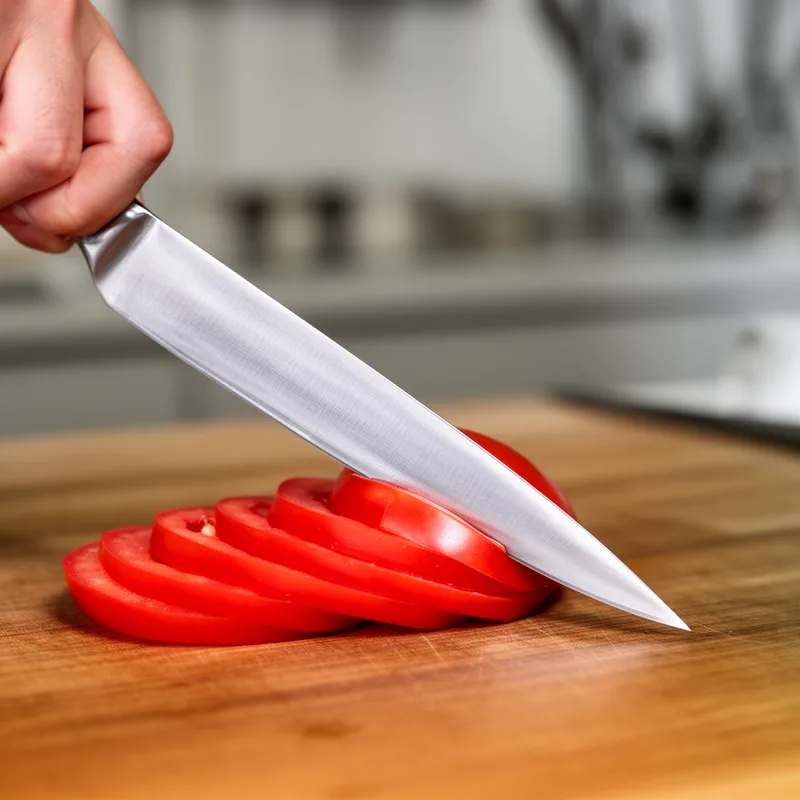
unblunt
7.7
A tool with a sharp edge or point that cuts easily
- adjective
- /ʌnˈblʌnt/
:
afilado
- The chef preferred to use an unblunt knife for slicing vegetables quickly and cleanly.
Examples
-
After sharpening, the scissors were completely unblunt and cut through paper with ease.
-
The archaeologist was surprised to find an unblunt arrowhead among the ancient tools.
-
The knife is unblunt and ready for use.
-
I need an unblunt tool for this project.
-
The chef preferred to use an unblunt knife for slicing vegetables quickly and cleanly.
-
After sharpening, the scissors were completely unblunt and cut through paper with ease.
-
The archaeologist was surprised to find an unblunt arrowhead among the ancient tools.
Synonyms


Antonyms

How Sharp

Surface Forms
unblunt positive
Morphology
Etymology
Unblunt combines the common prefix un- ('not') with blunt ('dull' or 'rounded'), so it literally means 'not dull' or sharp. That's why an unblunt knife has a keen edge and cuts cleanly.