
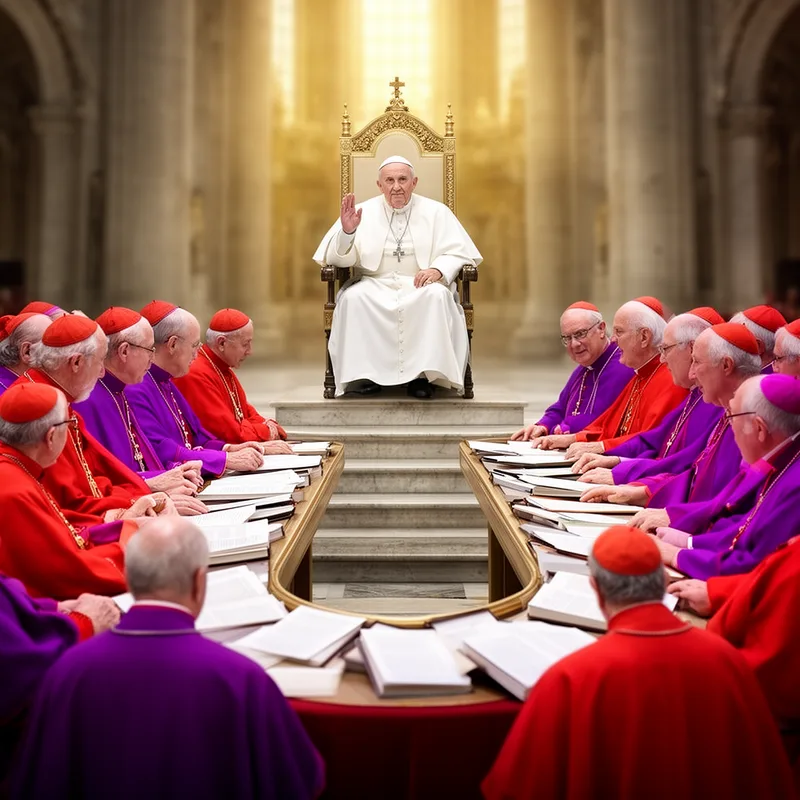
ultramontanism
- noun
- /ˌʌltrəˈmɒntənɪzəm/
- Formal
- The rise of ultramontanism in the 19th century reinforced the pope's influence in Catholic doctrine and practice.
Examples
-
In discussions about church governance, ultramontanism emphasizes the pope's role over local bishops.
-
It's most certainly the spirit of ultramontanism at work.
Blog text (27) -
This would combat Neo-ultramontanism and the emphasis on ultramontanism, along with ultra-clericalism, which are internal heresies of the Roman church.
Blog text (30) -
Many Catholics support ultramontanism because they believe the pope should have the highest authority in church matters.
Synonyms

A strong long-held belief in the Pope's authority
How Papal

Surface Forms
Morphology
ultramontanism = ultramontane (opaque) = ultramontane + ism
Although built from the adjective 'ultramontane' ('beyond the mountains'), the modern sense refers to a specific ecclesiastical political doctrine (support for papal supremacy) that is specialized and not directly inferable from the geographic sense.
Etymology
The word ultramontanism comes from ultra 'beyond' and the root mont- 'mountain', and it first described people who looked 'beyond the mountains' to the pope in Rome for authority. So ultramontanism today means the belief that the pope should have the highest authority in church matters.

