

ultima Thule
- noun
- /ˈʌltɪmə ˈθuːli/
- Archaic
- He needed to live in Ultima Thule.
Examples
-
"Medieval writers and geographers were generally content to put such places as Taprobane and Ultima Thule wherever there was room for them at the margins of their maps.
Academic text (2009) -
At other times, you used to sigh for Ultima Thule, probably Iceland, signifying the northwestern limits of the world.
Academic text (2009) -
Petrarch was never able to pin down the location of Taprobane and Ultima Thule to his satisfaction.
Academic text (2009) -
Many ancient cultures believed that the ultimate adventure lay beyond Ultima Thule, a realm filled with mysteries.
-
In literature, the phrase 'Ultima Thule' often represents an unreachable destination or an idealistic goal.
-
For explorers, Ultima Thule symbolized the farthest point one could reach in their quest for knowledge.
Synonyms

 4
4.5
4
4.5

A way of saying someone will go very far to help or find something
 2
7.2
2
7.2
A very distant place that seems at the limit of the world
 1
9.9
1
9.9
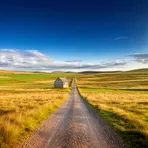
An ancient name for the far north used by Greek and Roman writers
 1
9.8
1
9.8
A place far from towns and people
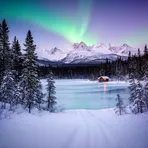
A remote northern area that has wild natural beauty
Surface Forms
Morphology
ultima + Thule
The phrase literally combines 'ultima' (Latin for 'last' or 'farthest', cognate with English 'ultimate') with 'Thule' (a classical name for the far north), so the meaning 'farthest/distant limit' is partly derivable from the parts. However, it is archaic and relies on classical/cultural knowledge of 'Thule' and a Latin form, so a B1 learner who simply knows the surface words may still need exposure to the idiomatic/metaphorical sense.
Etymology
Ultima Thule may come from Latin: ultima means 'farthest' and Thule was the name of a far northern island people once told stories about. Because it marked the edge of the known world, the phrase came to mean a very 'distant' or final 'limit'.