
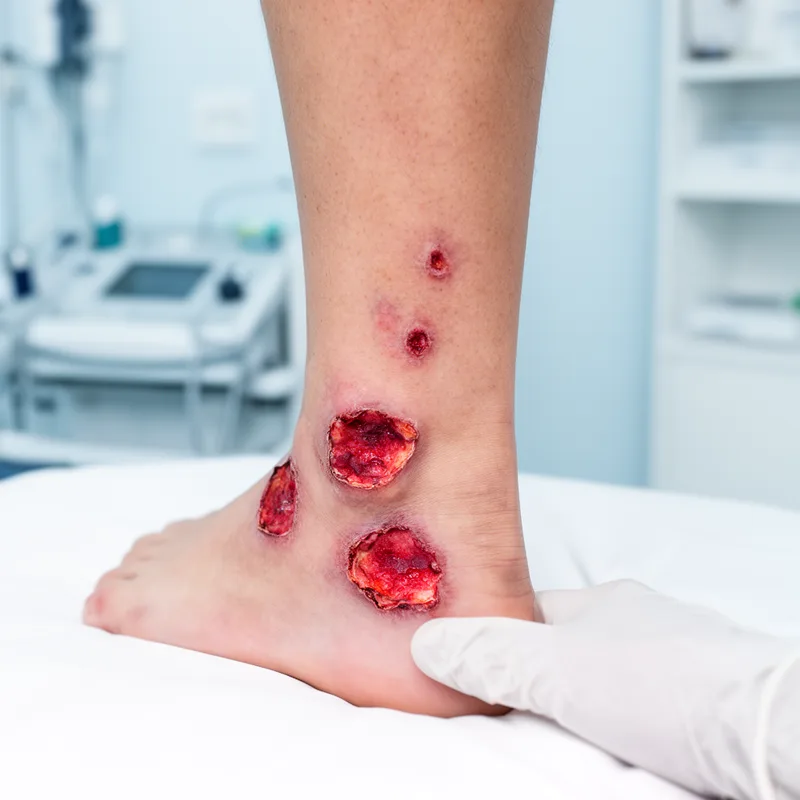
ulcerated
- adjective
- /ˈʌlsəˌreɪtɪd/
- Specialized
- After weeks of neglect, the wound became ulcerated, making it painful to walk.
Examples
-
Similar findings have been seen in persons with tetraplegia (16), where measured resting energy expenditure and percent predicted RMR were both significantly higher in ulcerated subjects than in those without pressure ulcers.
Academic text (1999) -
The patient was diagnosed with an ulcerated sore on the leg that required immediate medical attention.
-
Then these ulcerated puzzles duels aid away the skin and sometimes infected not only the fleshy parts but the very bones as well.
-
The tongue may be firm, dry, stony-hard, fissured, ulcerated, hemorrhagic, and/or painful.
Academic text (2005) -
Doctors observed that the ulcerated tissue was not healing properly and suggested a treatment plan.
Synonyms

 1
8.1
1
8.1

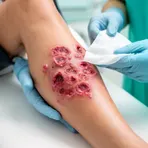
Having a sore on the skin or inside the body that does not heal

 1
9.9
1
9.9
Having sores like ulcers that damage tissue
Antonyms

How Damaged

Surface Forms
Morphology
Etymology
Ulcerated comes from the simple word ulcer, which goes back to the old Latin word ulcus meaning 'sore'. So, to be ulcerated is to have 'open sores' or wounds, which is why doctors use it for tissue that has ulcers.