
ubiquitin
 1
8.7

- noun
- /juˈbɪkwɪtɪn/
- Specialized
- In the same study, the X-linked gene Rnf12, which encodes the ubiquitin ligase Rnf12/RLIM, is identified to be a critical survival factor for milk-producing alveolar cells 23.
- ubiquitin ligase
- ubiquitin-protein
- ubiquitin and proteasomes
Examples
-
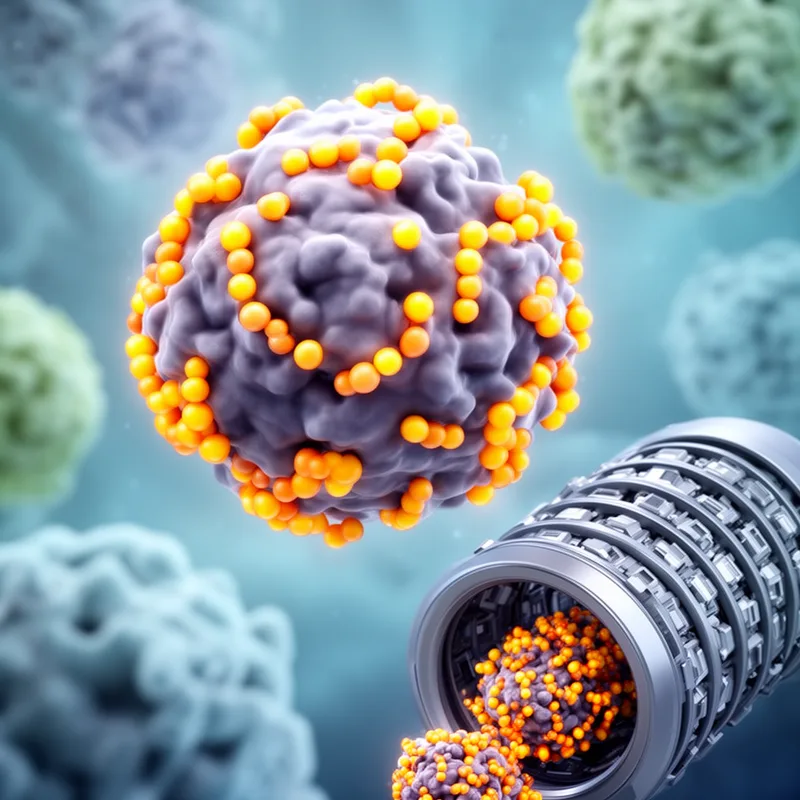
Ubiquitin attaches to misfolded proteins to mark them for breakdown in the cell.
-
Primer sequences used for PCR analyses are listed in Table S1, and expression of the ubiquitin gene (Os02g0161900) was monitored as an internal control.
Academic text (2018) -
It turns out ubiquitin is recycled inside the cell.
-
Possible interaction of HMB with the ubiquitin-proteasome proteolysis-dependent pathway
Blog text (23) -
And so this week in recitation, right, you're looking at using π mole and ubiquitin as an example.
-
However, recent studies have shown that HMB's anticatabolic effects are at least in part mediated by attenuation of the activation and increased gene expression of the ubiquitin pathway.
Blog text (23) -
Evidence from cachectic cancer studies suggests that HMB may inhibit the ubiquitin-proteasome proteolytic pathway responsible for the specific degradation of intracellular proteins.
Blog text (23) -
For instance, in the MON810 maize, the insertion of the transgene in the ubiquitin ligase gene caused a complex recombination event, leading to the synthesis of new RNA products encoding unknown proteins.
Blog text (14) -
Researchers found that without ubiquitin, the proteins would not be recycled properly.
-
The role of ubiquitin in cellular processes is crucial for regulation of protein levels.
Surface Forms
Morphology
ubiquitin = ubiquitous (semi-transparent) = ubiquit + in
Formally derived from the adjective 'ubiquitous' with the protein-forming suffix '-in', but the specific biochemical function ('tags proteins for breakdown') is specialized and not predictable from 'ubiquitous' alone.
Etymology
The word ubiquitin comes from the Latin ubique 'everywhere' plus the protein ending -in, named because this small protein is found in cells all over the body. Think of ubiquitin like a tiny 'tag' that sticks to many proteins to mark them for removal or recycling.