
tyrosinase


 1
9.0
- noun
- /taɪˈrɒsɪneɪs/
- Specialized
- We chose tyrosinase, an important enzyme in melanin biosynthesis, because the genomic organization (n6) and the cDNA sequence (n7) are known.
- tyrosinase enzyme
Examples
-
The best understood of these diseases is oculocutaneous albinism type 1 (OCA1), which results from a total lack of the enzyme tyrosinase.
Academic text (2008) -
A third form, tyrosinase-variable albinism, results in infants with the physical characteristics of OCA1, but over time their skin tans lightly and their hair becomes yellow or light brown (Oetting et al. 2003).
Academic text (2008) -
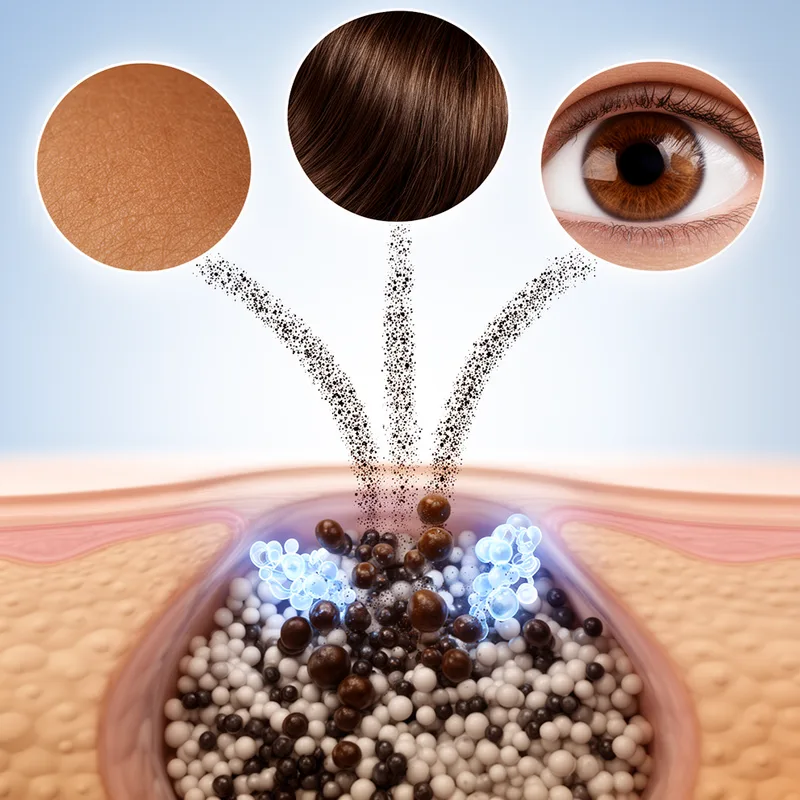
The researcher studied tyrosinase, an enzyme that plays a critical role in melanin production for skin and hair color.
-
A lack of tyrosinase results in albinism, characterized by very light skin and hair due to insufficient melanin.
-
Understanding how tyrosinase functions is essential for developing treatments for pigmentary disorders.
Surface Forms
Morphology
Etymology
The word tyrosinase comes from tyrosine, whose name comes from the Greek tyros meaning 'cheese' because it was first found in cheese, and the enzyme ending -ase. So tyrosinase means 'the enzyme that works on tyrosine', which explains why it helps make melanin and so affects the color of skin, hair, and eyes.