

twire
- noun
- Archaic
- Pollock sought to establish that dry twires failed so frequently that they continually interrupted work, with a detrimental effect on the economics of the hot blast.
Examples
-
The Attorney's final substantive point concerned the much-discussed water-cooled twire.
Academic text (2016) -
Although the water-cooled twire was an improvement, it was not indispensable to effective and beneficial working.
Academic text (2016) -
This characterization of the water-cooled twire as old anticipated the line taken by the Neilson camp in the patent trials.
Academic text (2016) -
No amount of pretending that the water-cooled twire had long been known and was part of background knowledge could explain why, at the Calder Iron Works, the dry twire was persisted with for so long.
Academic text (2016) -
He contended that the water-cooled twire was clearly necessary for effective use of the hot blast, and that Neilson was either ignorant of it or deliberately failed to mention it in the specification.
Academic text (2016) -
The gardener used a twire to secure the trellis to the garden post.
-
He tied the packages tightly with a piece of twire to prevent them from falling apart.
-
To keep the wire in place, she wrapped the loose ends of the twire around the frame.
Synonyms
 700
1.0
700
1.0

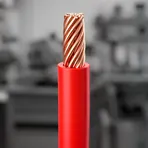
A thin metal strand used to carry electricity or to fasten things
 222
1.0
222
1.0
A thin cord used to tie or fasten things
 176
1.0
176
1.0
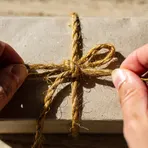
A thin, flexible length of twisted fibers used for tying things
 107
1.0
107
1.0
A piece of string or ribbon used to fasten things together
How Thin

Surface Forms
Etymology
Twire can be remembered as a blend of twist and wire, with wire meaning the thin metal thread and twist giving the idea of something small and wrapped, a bit like 'twisted wire'. So twire means a thin metal strand used for tying or fastening.