
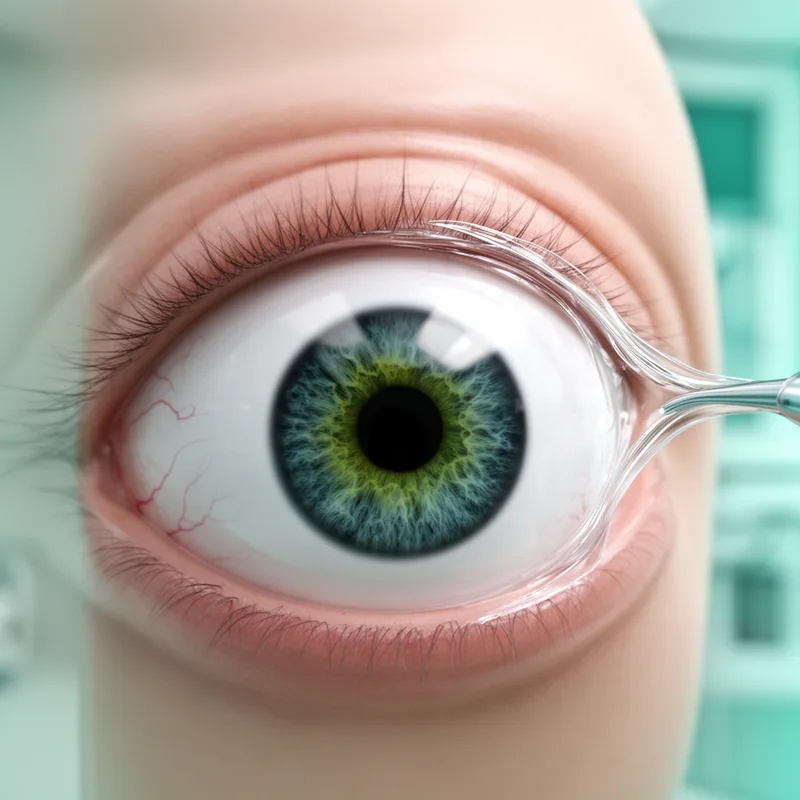
tunica conjunctiva bulbi
- noun
- /ˈtjuːnɪkə kənˈdʒʌŋktɪvə ˈbʌlbaɪ/
- Specialized
- Damage to the tunica conjunctiva bulbi can result in irritation and redness of the eye.
Examples
-
The tunica conjunctiva bulbi protects the eye from foreign particles.
-
Scientists studied the healing process of the tunica conjunctiva bulbi after surgery.
-
Inflammation of the tunica conjunctiva bulbi often accompanies conjunctivitis.
-
What role does the tunica conjunctiva bulbi play in eye health?
-
Inflammation of the tunica conjunctiva bulbi often leads to symptoms like tearing and discomfort.
-
Damage to the tunica conjunctiva bulbi can cause significant irritation and redness in the eye.
-
The tunica conjunctiva bulbi helps to protect the cornea and sclera from environmental irritants.
Synonyms

A thin clear layer covering the white of the eye and the front of the eyeball

A thin layer that covers the white of the eye and the clear front surface
Surface Forms
Morphology
tunica + conjunctiva + bulbi
The phrase is a literal, compositional Latin anatomical noun phrase: 'tunica' (layer) + 'conjunctiva' (the eye membrane) + 'bulbi' (of the eyeball), so its meaning ('the conjunctival layer of the eyeball') follows directly from the parts. Although technical and Latin-derived, this construction is cross-linguistically consistent in medical terminology, making the sense recoverable for learners who know the constituent meanings.
Etymology
Tunica conjunctiva bulbi comes from Latin words meaning tunica 'coat', conjunctiva 'joined' and bulbi 'bulb', that is the eye. The name gives a clear picture of a thin 'coat' joined to the eye 'bulb', which is why it means the thin clear layer that covers the front of the eye.

