
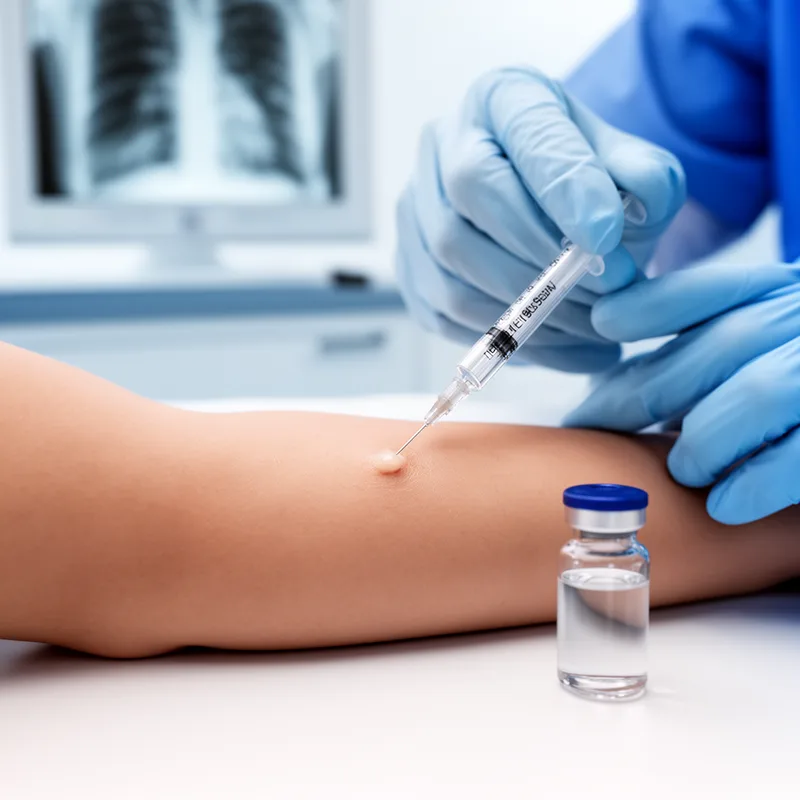
tuberculin
- noun
- /tjuˈbɜrkjʊlɪn/
- Specialized
 :
tuberculina
:
tuberculina
- All tuberculin-positive individuals were advised to have a medical assessment, including chest radiography and sputum culture.
- tuberculin test
- tuberculin skin
- tuberculin positive
Examples
-
Overall TB and latent TB infection prevalence and annual tuberculin skin testing conversion rates (i.e., incidence of new infection) were 2.7%, 34.6%, and 1.7%, respectively.
Academic text (2013) -
If a child has had a recent MMR and requires a tuberculin test, then a four-week interval should be observed.
Academic text (2015) -
The owner of the farm from which the sick animal came and his family had tuberculin skin tests and were found to be negative.
Academic text (1992) -
We were able to show that by doing this simple intervention of training, the tuberculin testing rates increased dramatically.
-
6 of 106 subjects tested a second time became tuberculin positive.
Academic text (1992) -
All 6 individuals who were tuberculin positive on second testing had been in contact with culture-positive herds.
Academic text (1992) -
When hired 11 years earlier, the worker had a positive tuberculin skin test result but no other test indicating TB infection or disease.
Academic text (2011) -
The overall initial rate of positive tuberculin tests among contacts was 21% (81 of 394).
Academic text (1992) -
Among the MDR-TB contacts, 124 (60%) had positive tuberculin skin test results consistent with latent TB infection.
Academic text (2011) -
The doctor explained that the tuberculin test is essential for diagnosing tuberculosis.
Synonyms


 1
7.3
1
7.3
A substance injected into the skin to check for tuberculosis infection
Compounds

- Specialized
A test that checks if you have been exposed to tuberculosis bacteria by putting a small medicine under the skin
- Specialized
A skin test where a doctor puts a small amount of tuberculin under the skin to check for tuberculosis
Surface Forms
Morphology
Etymology
Tuberculin comes from tubercle, a word meaning 'small lump' that you also see in tuberculosis, and the ending -in, which names a substance. It is a liquid made from the tuberculosis germ that doctors use in tests, so the name links to the 'lumps' the disease can make.